Google Rating
4.8-Star Google Rating
Customer feedback on Google
Moriah Masonry & Landscaping repairs foundation cracks, settlement, and water leaks in South Yarmouth, MA, sealing active leaks and arresting movement in poured concrete, block, brick, and stone walls.
This work covers the cracks that let water in and the movement that keeps them growing. A hairline crack is a thin surface split. A structural crack runs deeper and often moves with the seasons.
You need it when a basement wall weeps after rain, when a crack widens year over year, or when a floor or wall shows uneven settlement. Left alone, water and movement both get worse.
Here on the Cape, the freeze-thaw cycle drives a lot of this. Water gets into a crack, freezes, expands, and splits it wider every winter. South Yarmouth sits right on Bass River near Nantucket Sound, so that wet-then-frozen cycle runs hard.
This page covers what crack and settlement repair includes, what it costs, how we do it, and how long it takes.
Rated 4.8 stars across 24 Google reviews. Every project starts with a free on-site estimate.
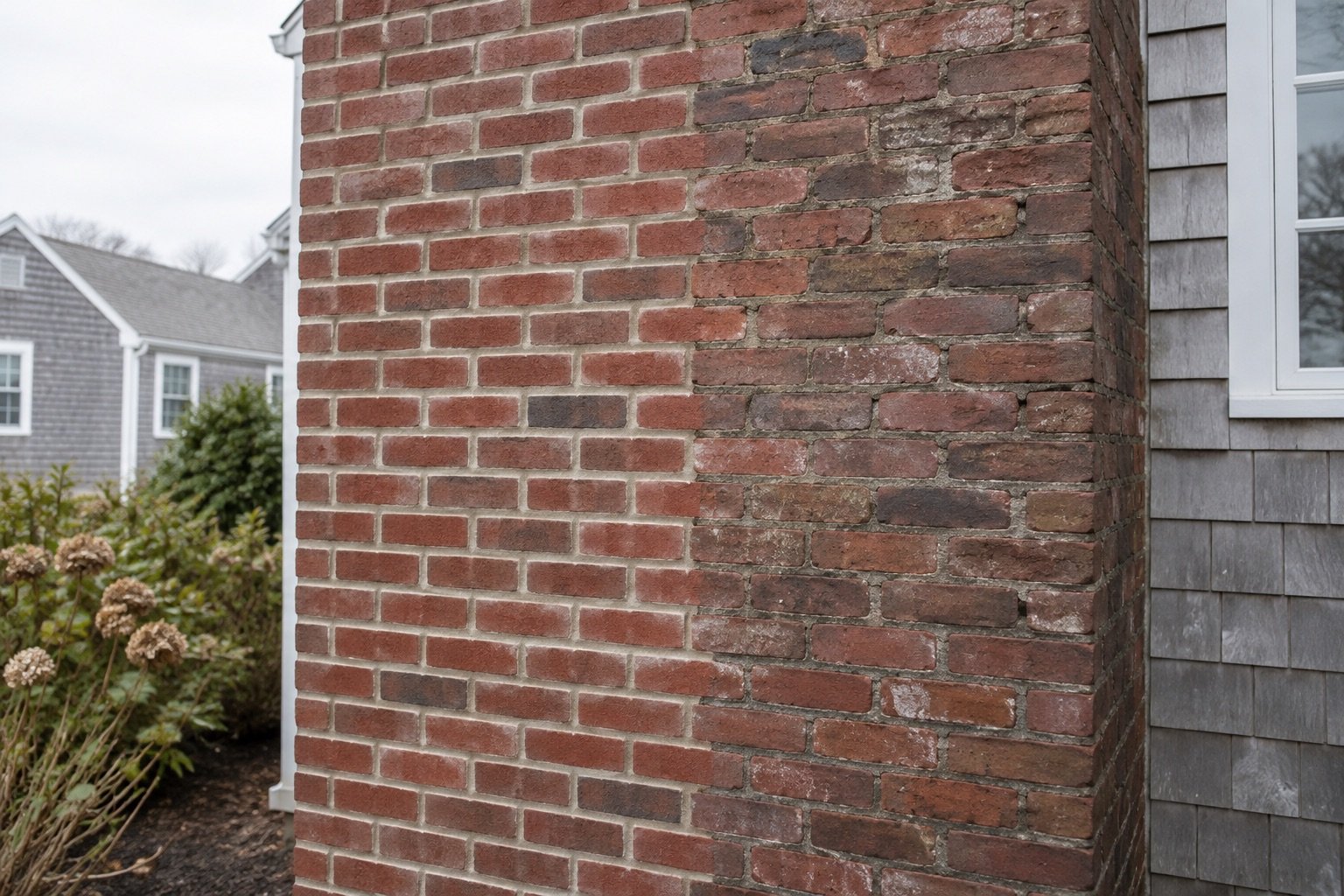
Every crack and settlement repair we do in South Yarmouth starts with a diagnostic assessment, crack cleaning and prep, injection materials and labor, port removal and surface finishing, basic drainage recommendations, and full site cleanup.
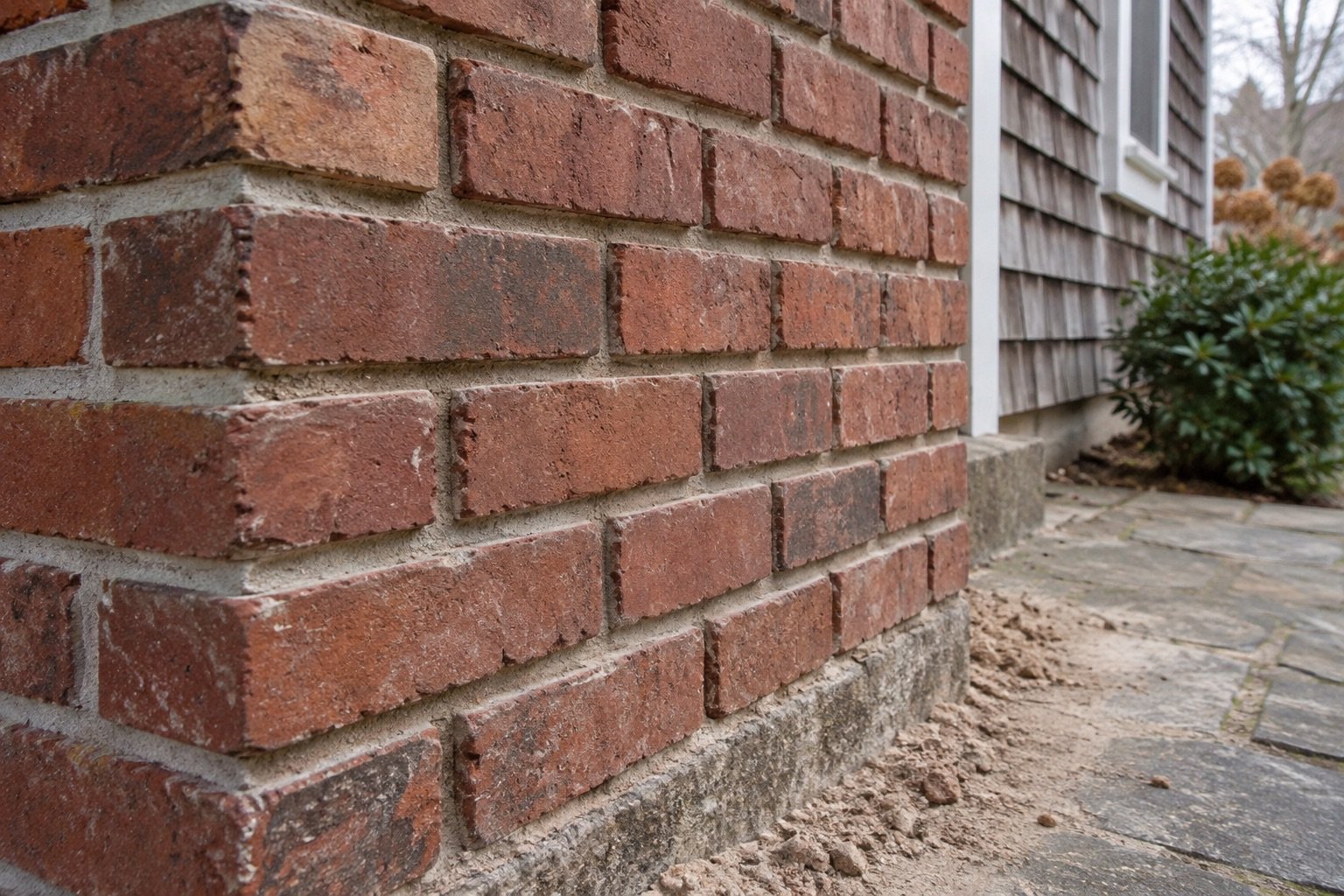
We start on site, reading the crack width, length, and moisture source before anything else. Every repair includes cleaning the crack down to sound material, setting injection ports every 8 to 12 inches, and pressure-feeding epoxy or polyurethane resin until it bleeds through the full depth of the wall.
After cure, we confirm with a moisture meter and a visual check that no active water is still moving through. Basic drainage recommendations are included on every job because sealing the crack without addressing the water source just moves the problem.
Port removal and surface finishing are part of the scope. When a wall is bowing or still settling, carbon fiber straps or wall anchors are installed at manufacturer spacing to arrest movement before injection.
The prep and the drainage recommendations are the parts most contractors skip, but they are what determine whether the repair holds through the next freeze cycle or opens back up by spring.
Some work is part of every repair. Other items depend on crack type, foundation material, wall condition, and whether the building department requires a permit or an engineer's review.
Injection ports are pressure-fed until resin bleeds through the full depth of the wall. Epoxy bonds a static, non-leaking structural crack back to near-original strength. Polyurethane foam expands on contact with moisture and stops an active leak. After cure, a moisture meter confirms no water is still moving through. For structural repairs, the work is reviewed against local building code and, where the building department requires it, by a licensed structural engineer.
Foundation crack repair in South Yarmouth typically runs $650 to $1,300 per crack for standard epoxy or polyurethane injection in 2026. Structural reinforcement, carbon fiber, wall anchors, or underpinning, runs $3,000 to $20,000 or more. Every project is quoted after an on-site assessment because the real cost depends on the crack, the wall material, and what we find on site.
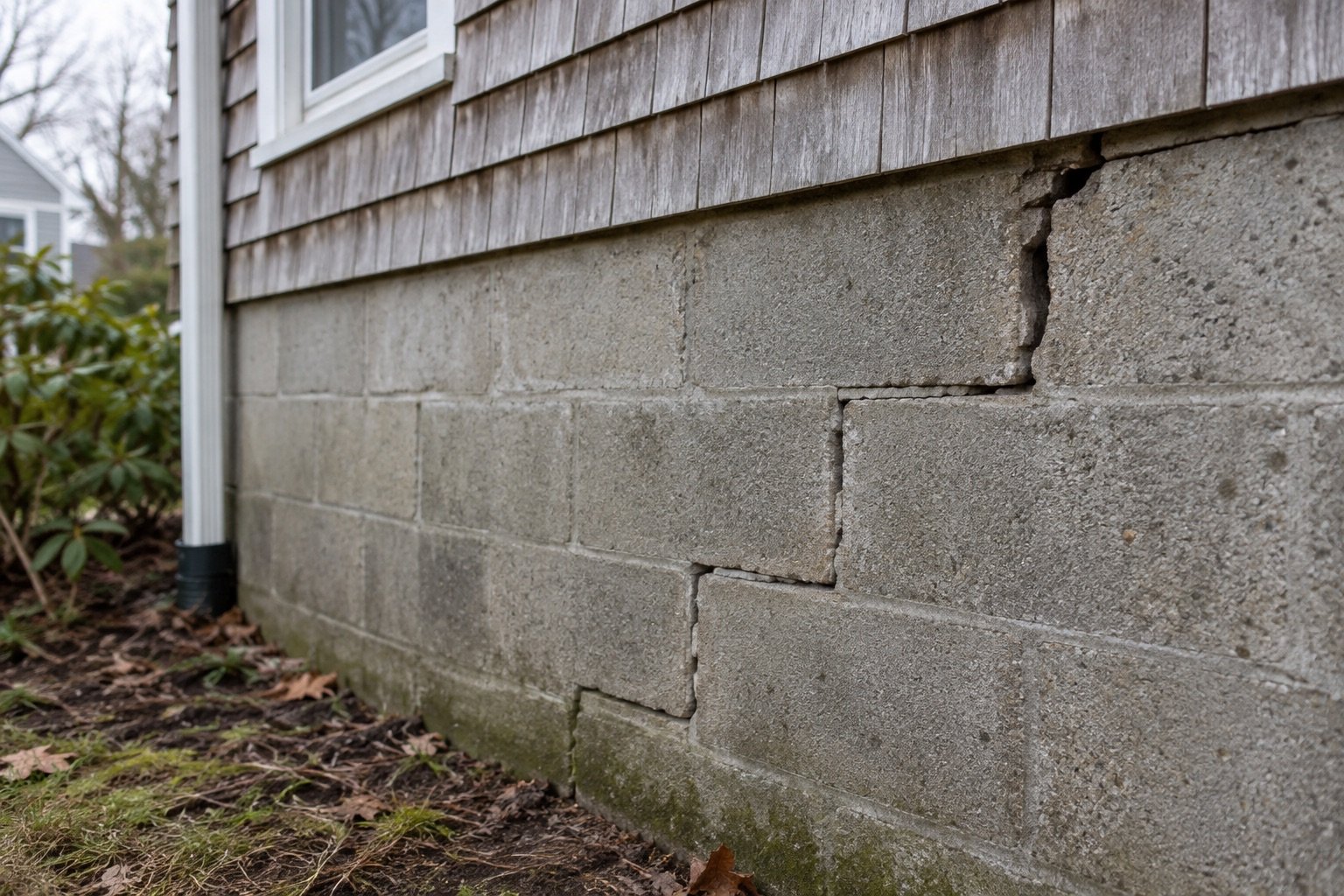
Cost tracks whether the crack is actively leaking or dry, the foundation material, how accessible the wall is, and how many cracks need repair. We come out, walk the basement or crawlspace, and price the actual project.
Two cracks with the same length can carry very different costs once wall depth, settlement severity, equipment access, and drainage requirements are taken into account. A flat number given over the phone would leave too much out.
Typical installed range in South Yarmouth, 2026
$650 to $1,300 per crack for epoxy or polyurethane injection
Whether the crack is leaking vs. dry, the foundation material, site access, number of cracks, and severity of settlement are what move a project inside that range. Structural reinforcement and underpinning start at $3,000 and can exceed $20,000 depending on scope. These figures are a starting point for planning, not a quote. The number on your estimate comes from the site visit.
These are the main site and construction factors we evaluate when preparing your estimate.
An active leak requires polyurethane foam and additional prep compared to a dry, static crack sealed with epoxy.
Poured concrete injects cleanly. Block, brick, and stone foundations take more time and material to fill correctly.
A finished basement, tight crawlspace, or exterior excavation all add labor and affect the scope of work.
Multi-crack jobs typically carry a lower per-crack cost than a single isolated repair.
A cosmetic crack is a seal job. Active structural movement requires stabilization and often an engineer's review.
Carbon fiber, wall anchors, and underpinning often require a building permit and a licensed structural engineer's review, which are priced separately.
We handle four repair systems for South Yarmouth foundations and masonry walls. The right choice depends on whether the crack is leaking, whether the wall is moving, the foundation material, and how far the settlement has gone.
01
A hairline crack is a thin, non-moving split, usually from concrete shrinkage. We clean it and seal the surface with a hydraulic cement or masonry sealer. Best for dry cracks that are not leaking. On the Cape, sealing early keeps freeze-thaw from prying it open.
02
For deeper cracks, we inject resin under pressure. Epoxy bonds static, non-leaking structural cracks back to full strength. Polyurethane foam goes into active leaks because it expands on contact with moisture and flexes to stop water infiltration. Best for cracks that leak or carry load.
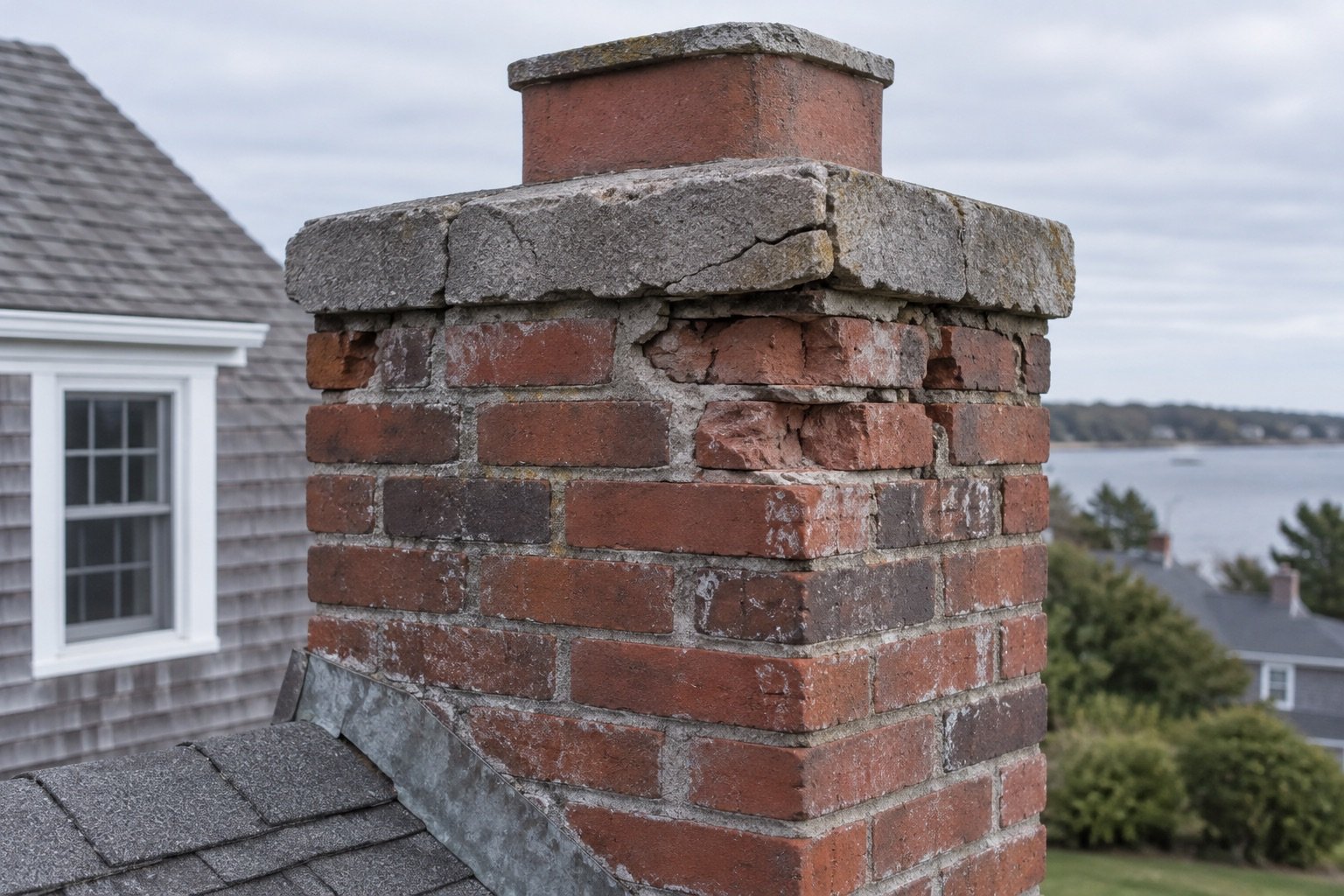 03
03
When a wall bows from hydrostatic pressure, water in the soil pushing inward, we add carbon fiber straps or staples, or steel wall anchors. These arrest the movement so the crack stops reopening. Best for walls that are leaning, not just cracked.
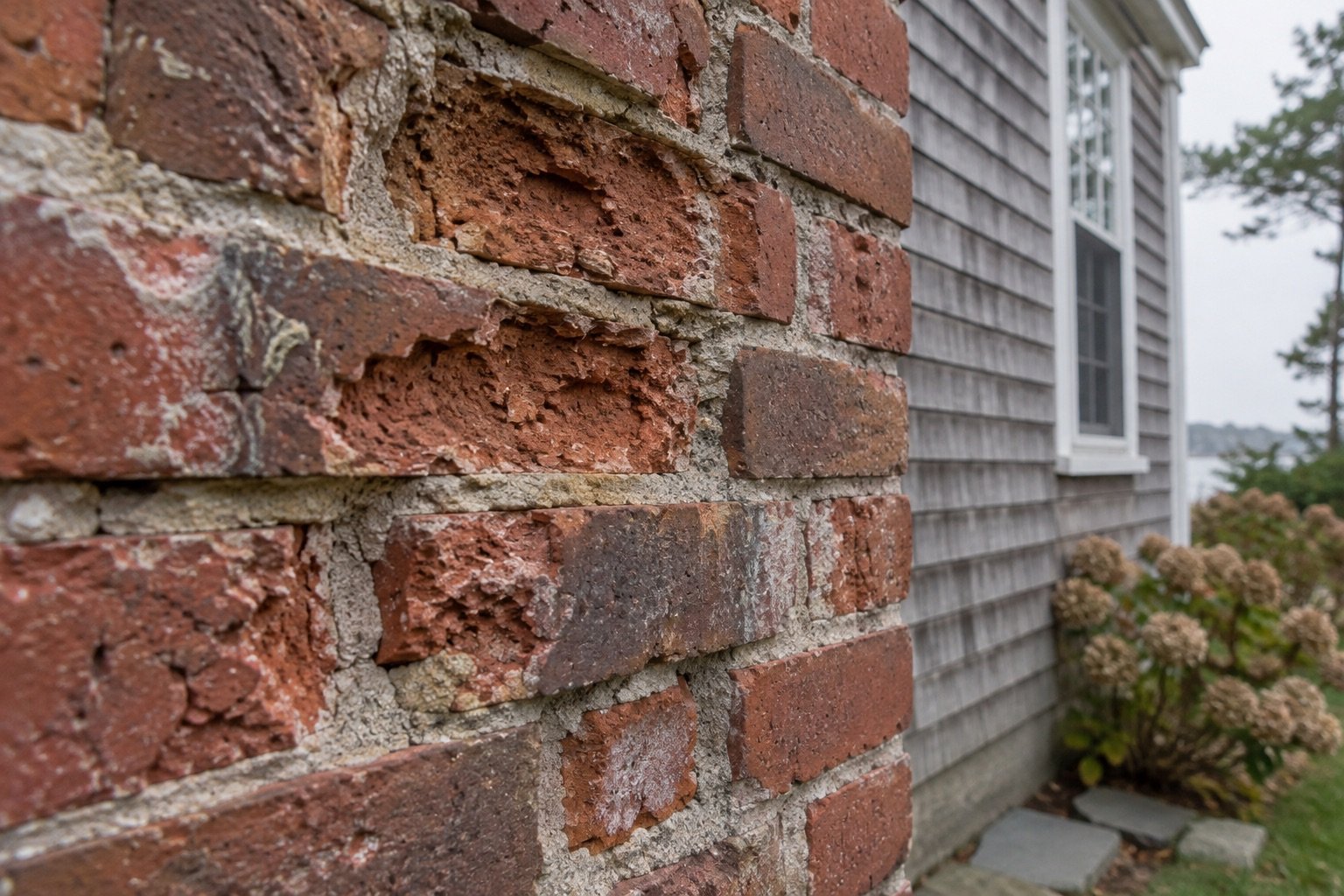 04
04
For real settlement, where a footing has dropped, we stabilize from below with underpinning or push piers. This is the heaviest fix and the longest. Best for differential settlement that is still moving. Sandy Cape soil makes a sound footing the whole game here.
Each repair system addresses a different problem. The crack type, moisture status, and degree of movement determine which option is right for your wall.
Whatever repair system you need, the result only holds when the source of water or movement is addressed alongside the crack itself. Grading, downspout extensions, and drainage behind the wall are especially critical on the sandy, high-water-table soils common across South Yarmouth. Pricing shown is a 2026 Cape Cod market estimate and is confirmed after an on-site assessment.
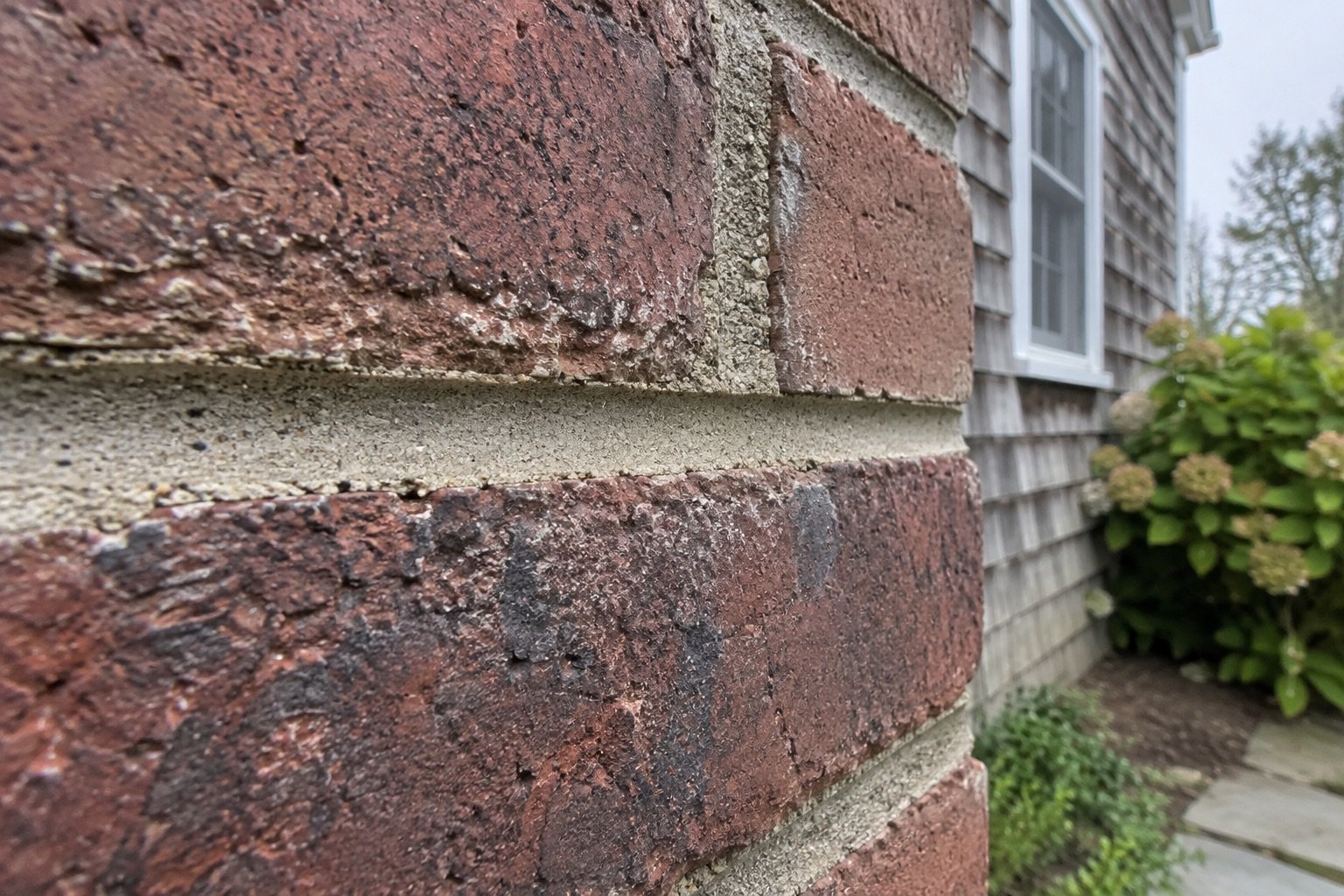
Every crack repair needs a diagnosis, not a default material. Ask whether the contractor identified the cause of the crack, settlement, hydrostatic pressure, or shrinkage, before selecting epoxy or polyurethane. On Cape Cod, where sandy soil and a high water table are the norm, the cause matters as much as the fix.
A contractor who uses one material for every crack is cutting corners. Structural epoxy bonds a static, non-leaking load-bearing crack back to strength. Polyurethane foam stops an active leak because it expands on contact with moisture. Using the wrong one produces the wrong result, and the crack comes back.
A cosmetic seal that skins the inside face leaves the core of the wall open. Ask whether ports are set every 8 to 12 inches and pressure-fed until resin bleeds through the full wall depth. That bleed-through is how you know the crack is filled front to back, not just tidy looking on the surface.
A sealed crack that still receives water will move again, especially through a Cape Cod winter. Confirm the contractor looks at grading, downspout extensions, and drainage, not only the wall face. Fixing the source is what separates a repair that holds from one that needs repeating after the next freeze cycle.
Our repair process
A foundation crack is more than what you see on the inside face. Its cause begins outside the wall, with soil pressure, water movement, and the freeze-thaw cycle that drives both. Getting the repair right means finding that cause before any resin goes in.
Injection ports, resin pressure, and cure time all happen inside the wall. What holds the repair long-term is addressing grading, drainage, and hydrostatic pressure before the next freeze cycle runs hard on the Cape.
We start on site, measuring crack width and length and tracing the moisture source. Crack type, foundation material, and whether water is actively moving are all identified before anything else happens. About 1 to 2 hours.
We determine whether the cause is settlement, hydrostatic pressure, or shrinkage, and whether a licensed structural engineer should review it before work begins. Taller or more complex structural repairs may require town review before construction begins. Same visit as the inspection.
The crew routes and cleans the crack to sound material, then sets injection ports every 8 to 12 inches. Clean prep is what lets resin bond instead of sitting loose against dust or spalling edges. Half a day for a standard crack.
We inject structural epoxy for static, non-leaking cracks or polyurethane foam for active water infiltration, pressure-feeding each port until resin bleeds through the full wall depth. A standard injection repair runs a half-day to one day including cure time.
If the wall is bowing or settling, we install carbon fiber straps, staples, or steel wall anchors at manufacturer spacing to arrest the movement. This stage runs 1 to 3 days depending on the number of anchors required. Underpinning or full perimeter correction runs 1 to 2 weeks.
We handle the water that caused the crack: grading correction, downspout extensions, or a drainage recommendation that keeps hydrostatic pressure from rebuilding behind the wall. Skipping this step means the next crack is coming. On Cape Cod's high water table and sandy soil, this stage is what makes the repair hold.
We confirm with a moisture meter and visual inspection that no active water is still coming through, then remove ports, finish the surface, and clean up the work area. You get a dry, sound wall and a site left clean.
Injection resin is eventually covered by parging or paint. Its quality isn't. That's why the prep, the port spacing, and the pressure are never rushed, and why drainage is part of every repair scope that needs it.
Planning your repair
Repair time depends mainly on crack type, whether the wall is actively leaking or moving, and how much stabilization is needed. For most South Yarmouth projects, the work falls into one of three ranges.
Dry, non-moving cracks cleaned and sealed same day. No injection ports, no cure wait, no exterior access needed.
Pressure injection of one or more cracks, including port setting, resin cure time, and carbon fiber or anchor stabilization if the wall is bowing.
Active settlement, dropped footings, or full perimeter stabilization with underpinning or push piers, including excavation and drainage work.
These ranges describe time on site. Permit lead time from the Yarmouth Building Department, weather windows for exterior excavation, and material lead times on anchor systems can all extend the overall calendar.
Demand for foundation and masonry repair peaks in May and June across South Yarmouth and the surrounding Cape. January and February are the slowest months. Booking ahead of the spring rush gives you more flexibility on timing and lets us get ahead of the next freeze cycle.
Read your walls
Crack and settlement repair from Moriah Masonry and Landscaping covers diagnostic assessment, crack cleaning and prep, injection materials and labor, port removal and surface finishing, basic drainage recommendations, and cleanup. Structural engineering reports, excavation, and drainage system installs are quoted separately.
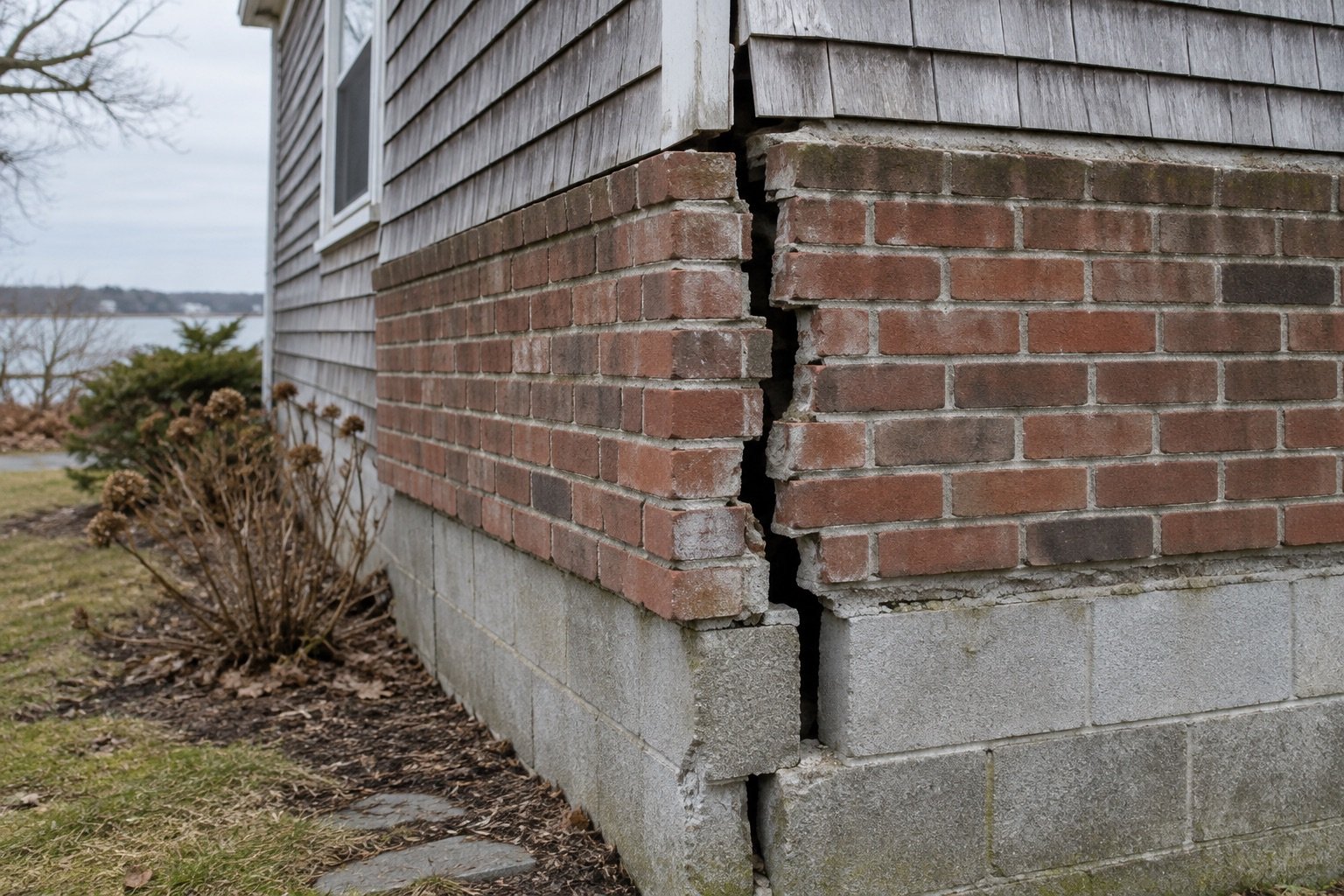
Every repair starts with an on-site assessment of crack type, width, depth, and moisture source. The crack is routed and cleaned to sound material before any resin goes in.
Injection materials and labor, port removal, and surface finishing are all part of the standard scope. You get a sealed, finished wall face with no exposed hardware left behind.
Basic drainage recommendations are included on every job. The site is left clean. Addressing how water reaches the wall is the step that makes the repair last through Cape winters.
A structural engineer's stamped letter or report is not part of the base scope. When wall bowing, differential settlement, or underpinning is involved, we identify that during the assessment and quote it separately.
Exterior excavation for access, interior or exterior drainage system installation, and permit fees are each quoted separately when the scope requires them.
Cosmetic wall refinishing, paint, and mold remediation sit outside the standard repair scope. If the assessment turns any of these up, we quote them as a separate line so you see exactly what you are paying for.
An on-site assessment lets us walk the wall with you, identify the crack type and moisture source, and give you a clear scope before any work begins.
Diagnosing a foundation crack on Cape Cod starts on site, not over the phone. Crack width, length, moisture, and the direction of travel all tell a different story. A horizontal crack signals lateral soil pressure. A stair-step crack in block or brick follows mortar joints under differential settlement. A vertical shrinkage crack may be stable or may be moving. Reading the wall correctly determines which repair goes in.
Once the cause is clear, the fix follows the crack, not a price sheet. Epoxy injection goes into static, non-leaking structural cracks where bond strength is the priority. Polyurethane foam goes into active leaks because it expands on contact with moisture and stops water immediately. Putting the wrong material in the wrong crack produces a repair that fails before the next winter.
Work within 100 feet of a wetland or 200 feet of a river may require Conservation Office approval before any exterior digging begins. Many South Yarmouth properties sit close to Bass River and other protected resource areas, which can affect how exterior crack or drainage work is scoped. View Yarmouth wetland information
Ademir Reine's position is simple: when a wall leans or a crack keeps coming back, it's almost never the masonry, it's the water and the base. We diagnose why water reached the wall before we inject, so you're not paying to reseal the same crack next year.
We install drainage so water has somewhere to go, on the jobs that need it. On the Cape, with its high water table and sandy soil, hydrostatic pressure is what pushes walls in and reopens cracks. Treating the water is how the repair holds.
We've worked South Yarmouth and the surrounding Cape for six years, on the sandy soil, salt air, and freeze-thaw that take apart work built only to look good on day one. We build for year ten, and we can take you to the jobs that prove it. Learn more about how we work.
Ademir Reine, Owner and Founder, learned masonry in Brazil and has more than twenty years in the trade. He has been building and repairing on Cape Cod since 2016 and is the person who walks your property, reads the crack, and tells you straight what it needs.
Every crack repair starts with diagnosing why water reached the wall, not just sealing what is visible on the surface.
Homeowners and property owners across Cape Cod trust Moriah Masonry & Landscaping for foundation crack repair, settlement correction, and leak waterproofing done right. See more feedback on Google .
Highly recommend Moriah Landscaping! Ademir and his team go above and beyond with their hard work, professionalism, timeliness, and quality of work. Ademir's team is pivotal in helping us receive excellent reviews on a new listing: Mariner's Landing. Really appreciate Moriah's care in their work.
Ademir and the Moriah team are excellent in their work. They do a great job with spring/fall cleanup and our winterizing. Professional and always willing to help. Since moving to the cape, they have been so reliable and consistent. I highly recommend using them.
5 stars!!!! The whole crew is great. Thanks as always and see you at the next project. BPU
