Google Rating
4.7-Star Google Rating
Customer feedback on Google
Moriah Masonry & Landscaping designs and builds custom fire pits and fire features across South Yarmouth, MA, and Cape Cod, using fire brick interiors, refractory mortar, and compacted, drained bases that hold through New England freeze-thaw cycles.
A fire pit does two things: it contains flame safely and it becomes the center of your outdoor space. Built right, it lasts for decades. Built wrong, the interior spalls, the base settles, and a Cape winter finishes the job inside of a few seasons.
Cape Cod soil is sandy and drains differently from the clay soils further inland. A fire feature base that does not account for that movement will lean and crack. We build for the ground you actually have.
This page covers what our fire pit work includes, what drives the cost, which fire feature type suits your property, how the build runs, how long it takes, and answers to the questions homeowners ask most.
Rated 4.7 stars across 27 Google reviews. Every project starts with a free on-site estimate.

Every fire feature we build in South Yarmouth follows the same fundamentals: excavation, a compacted gravel base, a concrete footing, a fire brick interior liner, an outer masonry wall and a finished capstone.

We start with a site evaluation, then excavate to at least twelve inches and install a compacted crushed-stone base. Where required by local code, a poured concrete footing is set below the frost depth before any block work begins.
The base also needs to drain. Water trapped under the ring through a Cape Cod freeze will lift and crack the structure, so weep points and proper grading are part of every build from the start.
The interior takes the heat. Standard block and mortar on the inside face cannot tolerate repeated high temperatures, so we line every fire pit with clay or concrete fire brick set in refractory mortar. This is the layer that determines how the feature holds up season after season.
The exterior takes the weather. Natural fieldstone, granite, cultured stone or manufactured hardscape block is mortared over the block core and finished with a capstone in bluestone, granite or thermal concrete pavers.
Veneer coursing is set level and plumb, mortar joints are properly struck, and the capstone is bedded flat so water sheds away from the core. Once the build is complete we clean the site and haul debris.
For wood burning features, we walk through the first burn with you. For gas features, the gas run is coordinated with a licensed gas fitter and must pass inspection before the feature is used.
Some work is part of every fire pit installation. Other items depend on the site, the fuel type and the overall project scope.
A correctly built fire pit has two distinct layers doing different jobs. The interior is lined with fire brick set in refractory mortar rated for sustained high heat. The exterior block core and veneer handle weather, freeze-thaw cycles and structural load. Below both sits a compacted crushed-stone base and, where required, a concrete footing below the frost depth. Drainage is built into the base so that water cannot be trapped under the ring through a Cape Cod winter.
Every fire feature is priced after an on-site assessment because the real cost depends on the size, the material, the fuel type and the conditions we find on your property.

Cost tracks the diameter and height of the feature, the material you choose, whether it burns wood or gas, how much excavation the base requires and how accessible the site is for equipment. We come out, walk the property and price the actual project.
A simple wood burning ring set into an existing patio and a gas fire table with a built-in seat wall are very different scopes. A flat number given over the phone would leave too much out.
Typical installed ranges on Cape Cod, 2026
$2,500 to $22,000 installed
A standalone masonry wood burning fire pit typically runs $2,500 to $6,000. A gas fire feature with a buried gas line runs $3,500 to $9,000 and up. A paver patio built around a fire pit with a seating wall runs $12,000 to $22,000. Size, wood burning or gas, the material tier, site prep and whether the feature stands alone or is built into a patio are what move a project inside those ranges. It is a planning range, not a quote. The number on your estimate comes from the site visit.
These are the main site and construction factors we evaluate when preparing your estimate.
The diameter and height of the feature determine how much base material, block core, liner and veneer the project requires.
Wood burning features cost less to build. Gas features require trenching, a buried gas line and coordination with a licensed gas fitter, which adds to the scope.
Concrete block core with a cultured stone veneer, natural fieldstone, granite and manufactured hardscape systems each carry different material and labor costs.
Grading, excavation depth, tree or stump removal and soil conditions all affect how much base work is needed before the first course goes down.
A fire pit built into a new patio and seat wall is a larger project than a standalone ring. Bundling scope into one build is often more efficient than staging it.
Tight yards, slopes and limited equipment access can change how materials reach the work area and how excavation is carried out.
We build four fire feature types for Cape Cod properties. The right choice depends on your fuel preference, the size of your outdoor space, whether seating is part of the project and how the feature connects to the rest of your hardscape.
01
A site-built masonry fire pit with a fire brick interior and stone or block veneer outside. No gas line required. The fire brick liner and refractory mortar handle repeated heat cycles while the outer wall and capstone stand up to Cape weather and freeze-thaw winters.
02
A masonry-built fire feature connected to a buried gas line. We build the structure and coordinate with a licensed gas fitter for the gas run, which is licensed trade work. Gas lights instantly and produces no embers, making it a practical choice where smoke near neighbours is a concern.
 03
A fire pit integrated into a surrounding masonry seat wall. The seat wall is capped in bluestone, granite or thermal pavers and ties the fire feature into the broader patio design. This is often bundled with patio installation for a complete outdoor living area.
 04
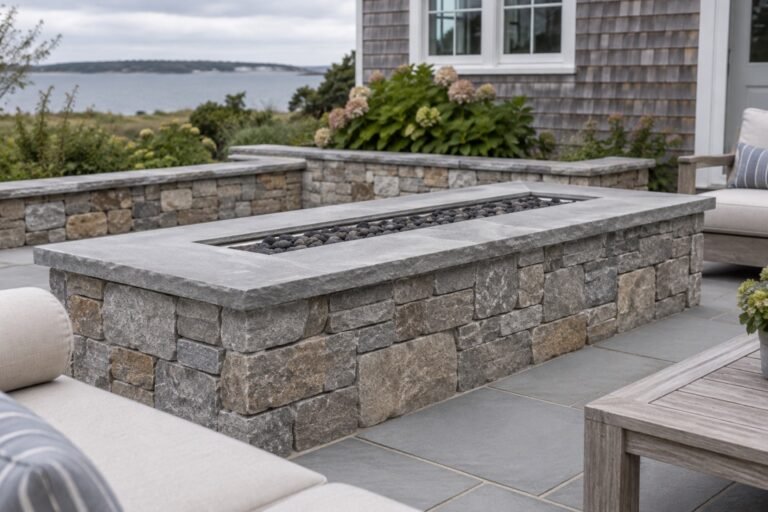
A raised masonry table height structure with a gas or wood burning insert set into the top surface. The raised format works well on finished patios where a ground-level pit would interrupt the surface, and it suits smaller spaces that still want a permanent fire feature.
Each fire feature type has a different build requirement and purpose. Your site and how you plan to use the space determine which option makes the most sense.
Whatever fire feature you choose, fire brick and refractory mortar on the inside face are not optional on a Cape Cod build. Standard block and mortar cannot take repeated heat cycles and will spall within a few seasons. A compacted stone base with proper drainage keeps winter frost from lifting the structure from below.

A fire pit that settles or cracks after one or two winters was almost always built without proper base preparation. Ask for a minimum twelve inches of compacted crushed stone and a concrete footing below frost depth where the structure demands it. Cape Cod soil is sandy and drains well, but the base still has to be engineered for the weight above it.
Standard block and ordinary mortar cannot withstand repeated direct heat. The interior of any wood burning fire pit should be lined with clay or concrete fire brick set in refractory mortar rated for sustained high heat. Ask specifically what material lines the inside, because the answer tells you whether the feature will hold up season after season.
If you are adding a gas fire feature, the gas line is licensed trade work. A masonry contractor who promises to handle the gas run without a licensed gas fitter is a red flag. The right approach is coordination: the masonry crew builds the feature and the licensed fitter handles the connection and the required inspection sign-off.
Open burning rules on Cape Cod vary town by town and season by season. Before any design is finalized, confirm setback and clearance requirements with your local fire department. A contractor who skips this step leaves you with a feature that may not be legally usable, which is an expensive problem to correct after the mortar has cured.
Our construction process
A fire pit is more than the stone or block you see. Its performance begins below grade, with excavation, a compacted base, proper drainage and the right materials at every layer before the veneer is ever touched.
The base, the fire brick liner, the drainage and the refractory mortar all happen below or behind what you see. Those details are what allow a fire feature to hold up through Cape Cod winters without cracking or settling.
We walk the property, check grade, assess access and confirm clearance from structures and combustibles. Fuel type, size and setback requirements are discussed before any work is scheduled.
We pull the required permits and, for gas features, coordinate with a licensed gas fitter for the supply run. Open burning questions are directed to the local fire department before the build is scheduled.
We excavate at least twelve inches down and remove soil, roots or existing material that would prevent a stable, level base. The trench bottom is then compacted before stone is placed.
Compacted crushed stone and, where required, a poured concrete footing below frost depth form the base. A base that drains keeps water from being trapped under the ring through a Cape Cod freeze.
The block or CMU core is built course by course, level and plumb. Natural stone, granite or manufactured block veneer is then applied over the core with properly struck mortar joints and a capstone finish.
The interior takes the heat and the exterior takes the weather. Clay fire brick and refractory mortar line the inside face so the structure handles repeated, sustained high heat without spalling or cracking within a few seasons of use.
Final inspection is completed, the mortar is allowed to cure, and we walk through the first burn with the homeowner. The site is cleaned and debris is hauled away before we leave.
The base, the liner and the drainage are eventually out of sight. Their importance is not. That is why those stages are never rushed.
Planning your project
Build time depends on the type of feature, whether gas work is involved and whether the fire pit is standalone or part of a larger patio project. Most residential fire pit builds on Cape Cod fall into one of three ranges.
Excavation, compacted gravel base, block core, fire brick liner, veneer finish and capstone on a straightforward site.
Gas line trenching is coordinated with a licensed gas fitter. Inspection sign-off is required before the feature is used.
Larger scope projects combining a fire feature with a paver patio, seat wall or other hardscape elements require more time on site.
These ranges describe the work itself. Permit lead time, gas inspection scheduling, material availability and site conditions can extend the overall project calendar beyond the build window.
Demand for outdoor masonry work rises sharply in May and June across Cape Cod. Winter months are slower and offer more flexibility on timing. If you want the feature completed and cured before your summer season starts, getting on the schedule early gives you the best chance of that.
Read your property
Wood burning, gas, a built-in seat wall or a raised fire table: the right choice depends on how the space is used, what the site can accommodate and how much site work is already planned.
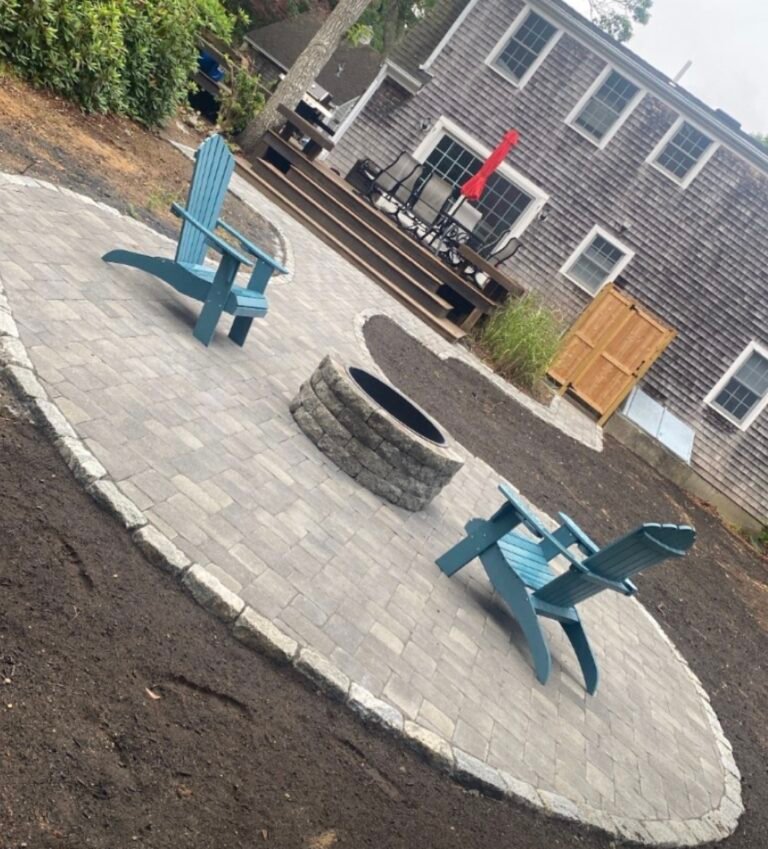
A site-built masonry ring with a fire brick liner and refractory mortar interior. No gas line needed. Requires wood storage and periodic cleaning, and local fire department rules apply directly to open burning.
Lights instantly, produces no embers and suits properties where smoke near neighbors is a concern. The gas run is licensed trade work coordinated alongside the masonry build. Trenching and inspection are part of the project timeline.
A fire pit integrated into a surrounding seat wall creates a defined outdoor room. The wall is built at a comfortable sitting height using matching stone or manufactured block and capped in bluestone or granite.
A raised masonry table with a gas burner set into the top surface. Works well on an existing patio where a lower pit would require significant excavation. The base under the patio is checked before work begins.
A site visit gives us what we need to recommend the right feature, confirm clearances and put together an accurate estimate.
Building a fire pit on Cape Cod is different from building one inland, and the difference starts below ground. The Cape's sandy soil shifts and drains differently than heavier inland soils, so the base under a fire feature needs proper excavation, compacted crushed stone and, where required, a poured footing below the frost line to keep the structure level through New England winters.
Water is the other variable. Moisture trapped under a masonry ring freezes in winter, expands and lifts the structure from beneath. That is why drainage, weep points and a compacted gravel base are part of every fire pit build from the start, not details added at the end. The interior takes sustained heat and the exterior takes coastal weather, and each part of the structure is built to handle its own job.
Open fire regulations are set town by town by the local fire department. What is permitted, whether a permit is required and when burning is allowed are not the same in every Cape Cod town or at every time of year. Check with your fire department before the build is scheduled. View Yarmouth wetland information
Every fire pit starts with excavation, a compacted crushed-stone base, and a footing that drains. Water trapped under a masonry ring through a Cape Cod winter will heave and crack the structure. We remove that risk from the start, on every project, not as an add-on.
The interior takes the heat and the exterior takes the weather. We use fire brick and refractory mortar on the inside and standard masonry on the outside. That separation is what keeps a fire feature looking right and performing safely after years of use, not just the day it was finished.
Ademir Reine, Owner & Founder, learned masonry in Brazil and has more than twenty years in the trade. He's been building on Cape Cod since 2016 and is the person who walks your site. Learn more about the company.
We can take you to the jobs that prove it. Ademir will take a prospective customer to see completed fire features in the area, so you're not judging the work from a photo. You can go stand next to it and see how it held up.
Proper excavation, base preparation and drainage are part of every fire pit and fire feature we build on Cape Cod.
Homeowners across Cape Cod trust Moriah Masonry & Landscaping for fire pit and outdoor masonry work that holds up through New England winters. Read more feedback on Google .
Highly recommend Moriah Landscaping! Ademir and his team go above and beyond with their hard work, professionalism, timeliness, and quality of work. Ademir's team is pivotal in helping us receive excellent reviews on a new listing: Mariner's Landing. Really appreciate Moriah's care in their work.
Ademir and the Moriah team are excellent in their work. They do a great job with spring/fall cleanup and our winterizing. Professional and always willing to help. Since moving to the cape, they have been so reliable and consistent. I highly recommend using them.
5 stars!!!! The whole crew is great. Thanks as always and see you at the next project. BPU
