Google Rating
4.8-Star Google Rating
Customer feedback on Google
Moriah Masonry & Landscaping installs concrete paver and bluestone walkways across South Yarmouth, MA, and Cape Cod, built on excavated, compacted, and properly drained bases that hold their grade through New England freeze-thaw cycles.
A walkway connects your driveway, entry, or yard without washing out, heaving, or going uneven underfoot. On Cape Cod that means the base has to be right. Sandy glacial soil drains fast but shifts under load, so a walkway that was not compacted in lifts will settle in the first few winters.
We install dry-laid concrete paver walkways, natural bluestone in random or dimensional cut, and combination paver-and-bluestone runs with soldier course borders. Every project starts with an excavation depth matched to your soil, not a standard number pulled from a spec sheet.
This page covers what our walkway work includes, what it costs, which material suits your property, how the build runs, how long it takes, and the most common questions Cape Cod homeowners ask before they commit.
Rated 4.8 stars across 24 Google reviews. Every project starts with a free on-site estimate.
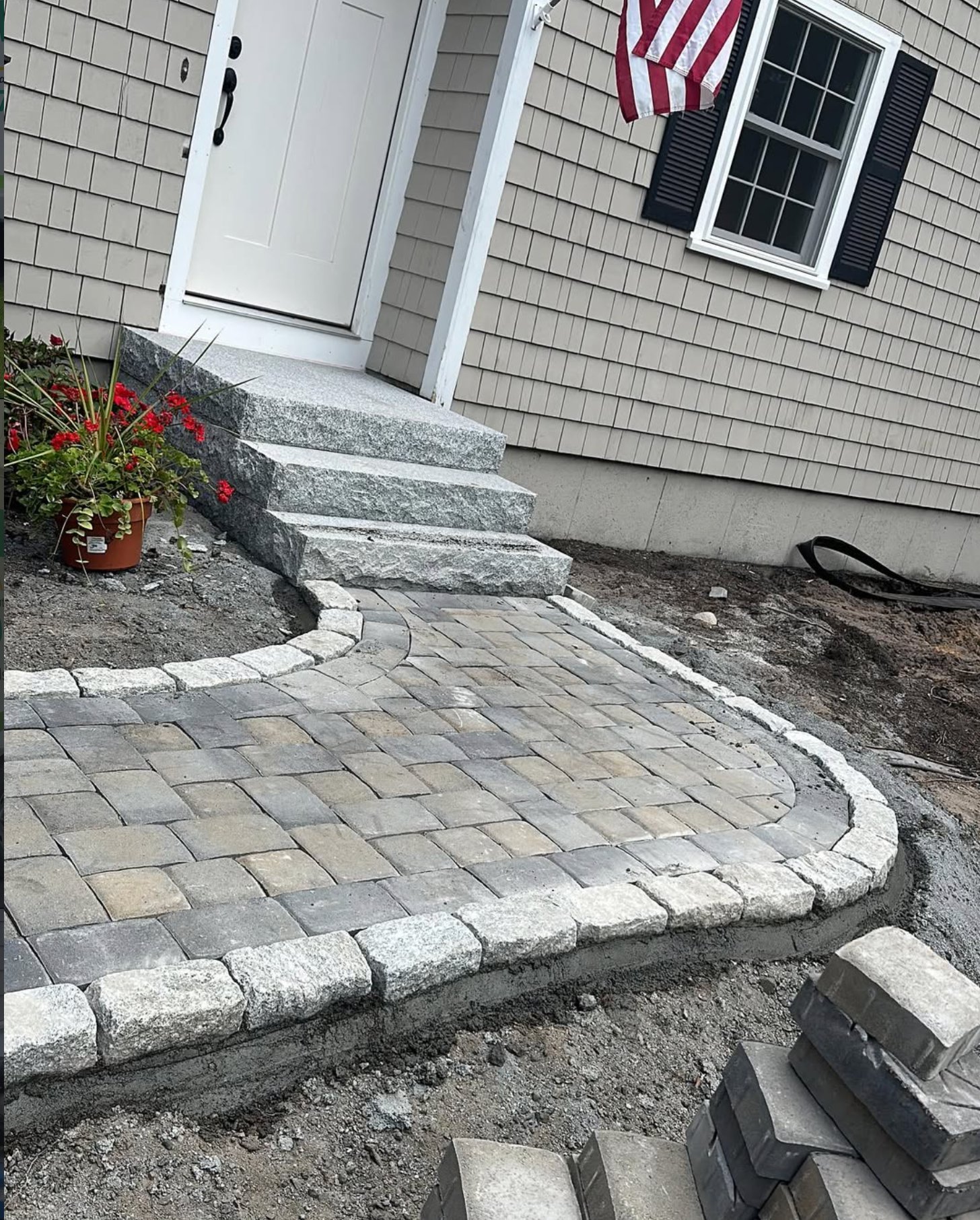
Every walkway we install in South Yarmouth follows the same fundamentals: excavation to the right depth, a compacted crushed-stone base, proper bedding, edge restraint, and joint sand set at a grade that drains away from the house.
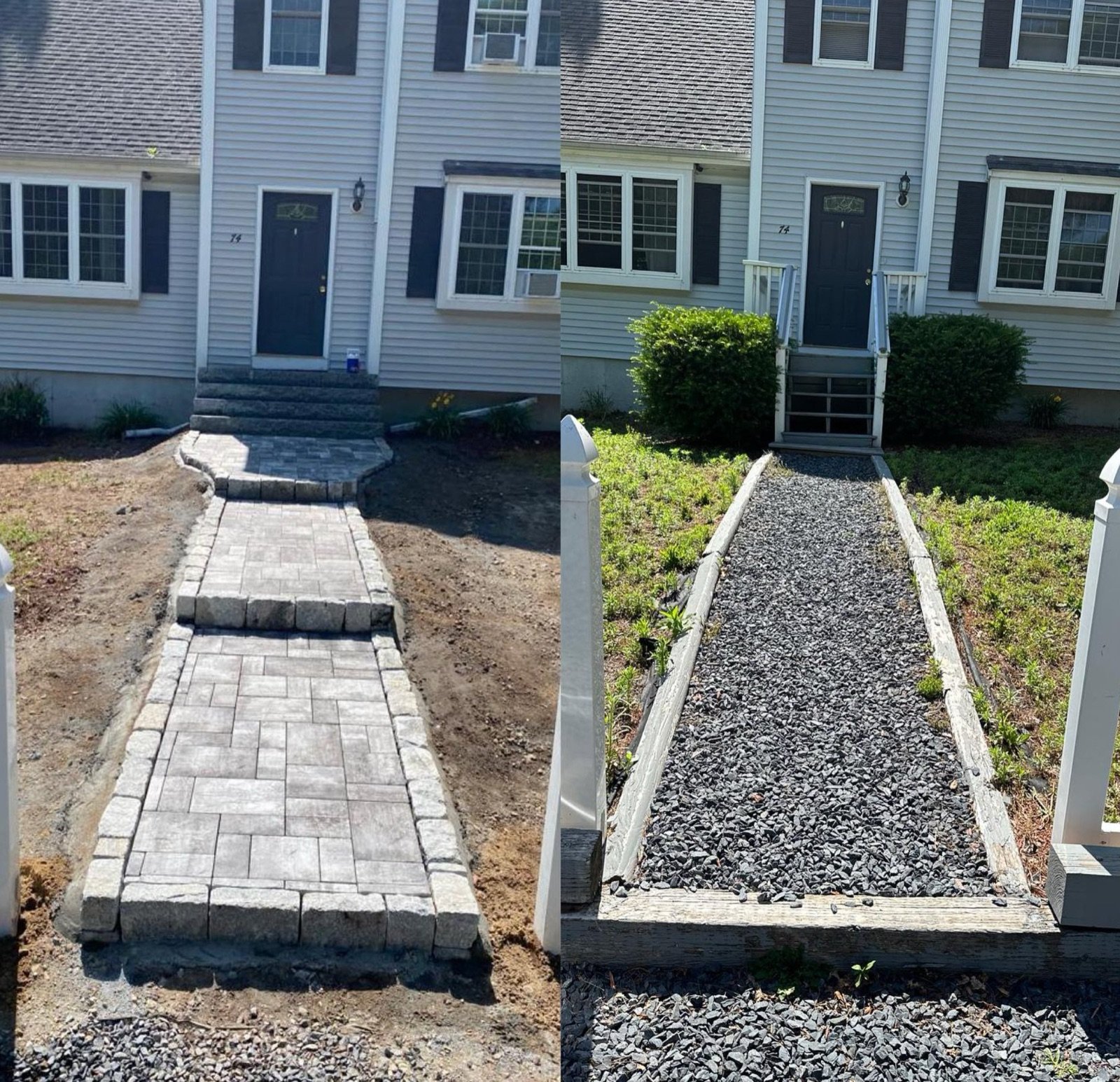
We start with a site evaluation and layout marking before a single shovel goes in the ground. Sandy Cape soil drains quickly but shifts under load, so we excavate to the depth your lot requires, typically 8 to 12 inches, remove spoils, and install geotextile fabric where the soil calls for it.
Crushed-stone base is compacted in controlled lifts using a plate compactor. Skipping lifts or under-compacting is what causes walkways to settle unevenly after the first freeze-thaw cycle.
Once the base is solid, we screed a bedding layer, set pavers or bluestone in the chosen pattern, and install edge restraints spiked per manufacturer specification so the field cannot spread. Joints are filled with polymeric sand and activated so they lock without cracking.
We pitch the finished surface 1 to 2 percent away from the house threshold. That slope keeps water moving off the walk and away from the foundation rather than pooling at the door.
Some work is part of every installation. Other items depend on the site, the material chosen, and the project requirements.
The surface you walk on is only as reliable as what sits beneath it. We excavate to subgrade, compact crushed stone in lifts, screed the bedding layer to the correct pitch, and set edge restraints before a single paver or bluestone flag goes down. When the base is built this way, the walk stays level through years of New England freeze-thaw cycles rather than heaving and settling in the first few winters.
Every walkway is priced after an on-site assessment because the real cost depends on the material, the run, and the conditions we find on your property.
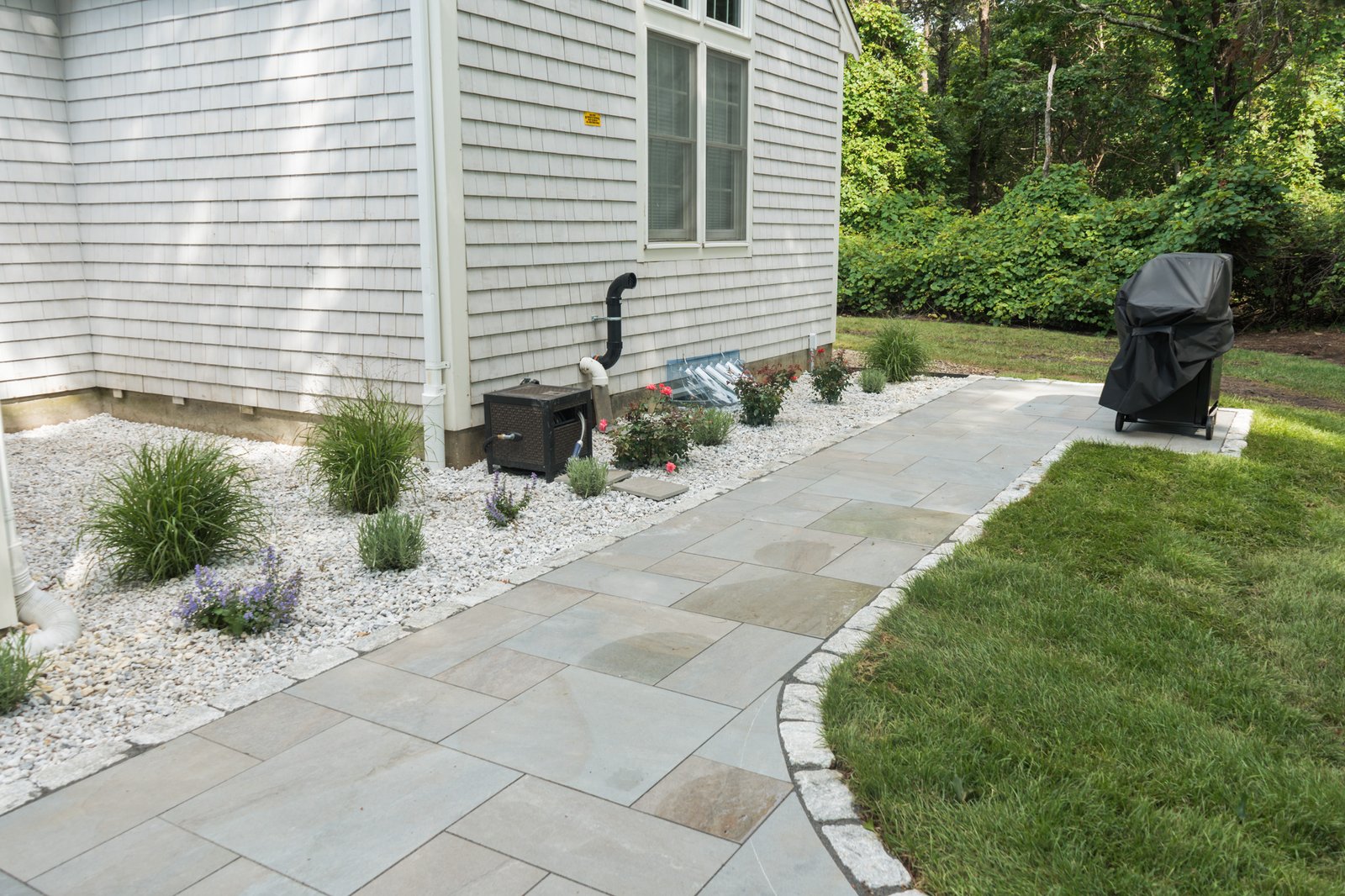
Cost tracks the material you choose, the length and width of the run, the number of curves and steps, how much grading the lot needs, and what excavation depth the soil calls for. We come out, walk the property and price the actual project.
Two walkways with the same square footage can have very different costs once base depth, drainage, access and pattern complexity are taken into account. A flat number given over the phone would leave too much out.
Typical installed range on Cape Cod, 2026
$12 to $28 per square foot
Where a walkway lands inside that range depends on its length, the material selected, the number of curves and steps, and how much grading the run needs. It is a planning range, not a quote. The number on your estimate comes from the site visit.
These are the main site and construction factors we evaluate when preparing your estimate.
Concrete pavers, natural bluestone, fieldstone and granite cobble edging each carry different material and installation costs.
Total square footage determines how much base material, bedding sand, surface units and labor the project requires.
Curved edges and integrated steps increase cutting time, material waste and the complexity of the installation.
Sandy Cape soil requires excavation to the depth the lot demands, compaction in lifts, and drainage behind and beneath the surface.
How much the run must be regraded to achieve a proper pitch away from the house affects excavation and spoils removal.
Tight yards or areas near wetland buffer zones can change how equipment and materials reach the work area.
We install four walkway systems for Cape Cod properties. The right choice depends on the look you want, the budget you are working with, how the run grades toward the house, and how formal or relaxed the overall landscape feels.
01
Modular concrete pavers give a consistent, structured appearance and are available in multiple colors and joint patterns including herringbone, running bond and basketweave. Because units are individual, a settled section can be lifted and reset without disturbing the rest of the walk.
02
Natural bluestone is available in irregular random flagging or in cut rectangular slabs with a cleft or thermal finish. It carries a higher material cost than concrete pavers but fits naturally into Cape properties and holds up well through freeze-thaw cycles when set on a proper base.
 03
03
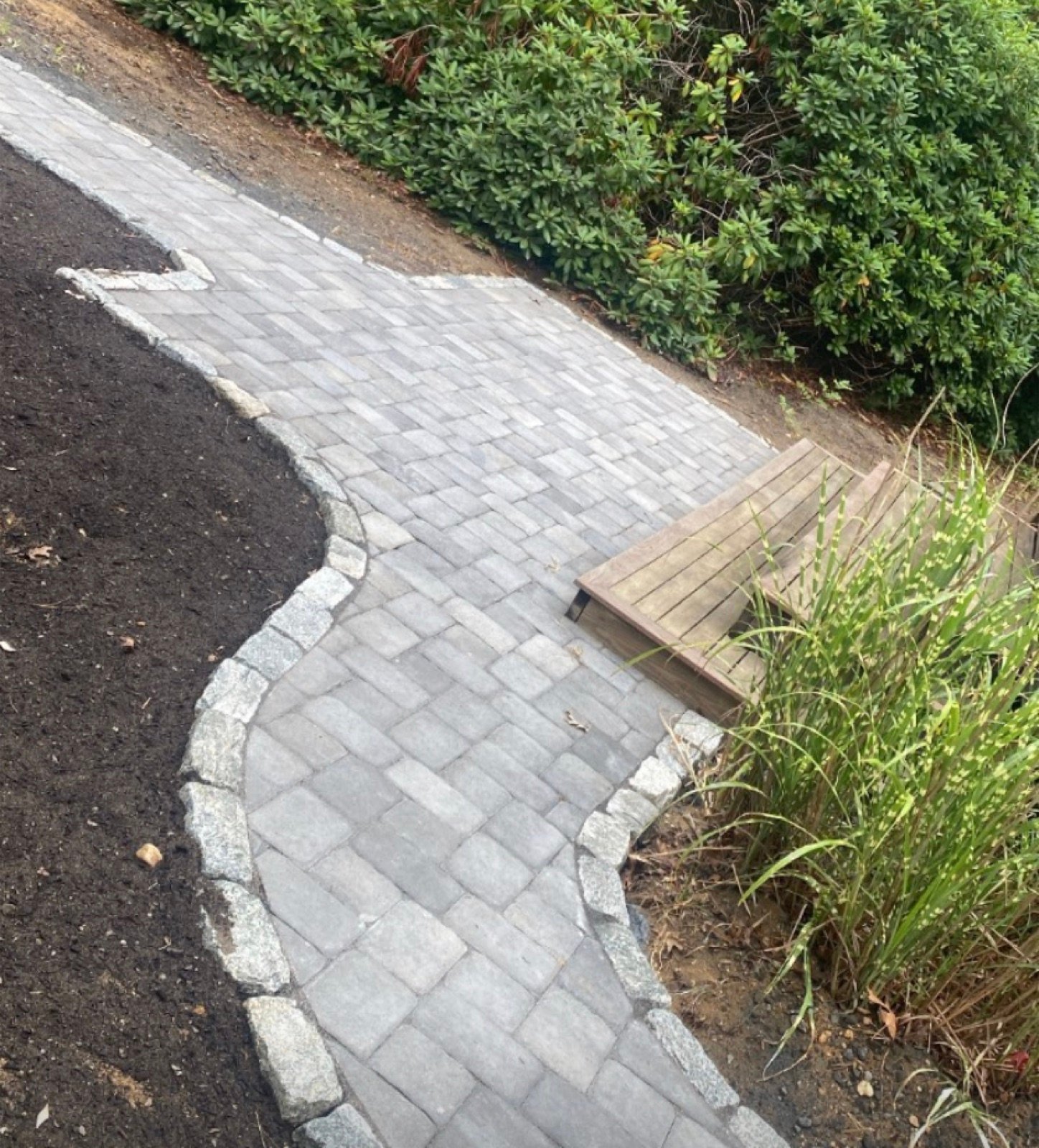
Fieldstone suits informal paths and garden walks where a relaxed, handcrafted look is the goal. Pieces vary in shape and color, which gives each installation its own character. It works best on runs without tight tolerances or heavy foot traffic.
 04
04
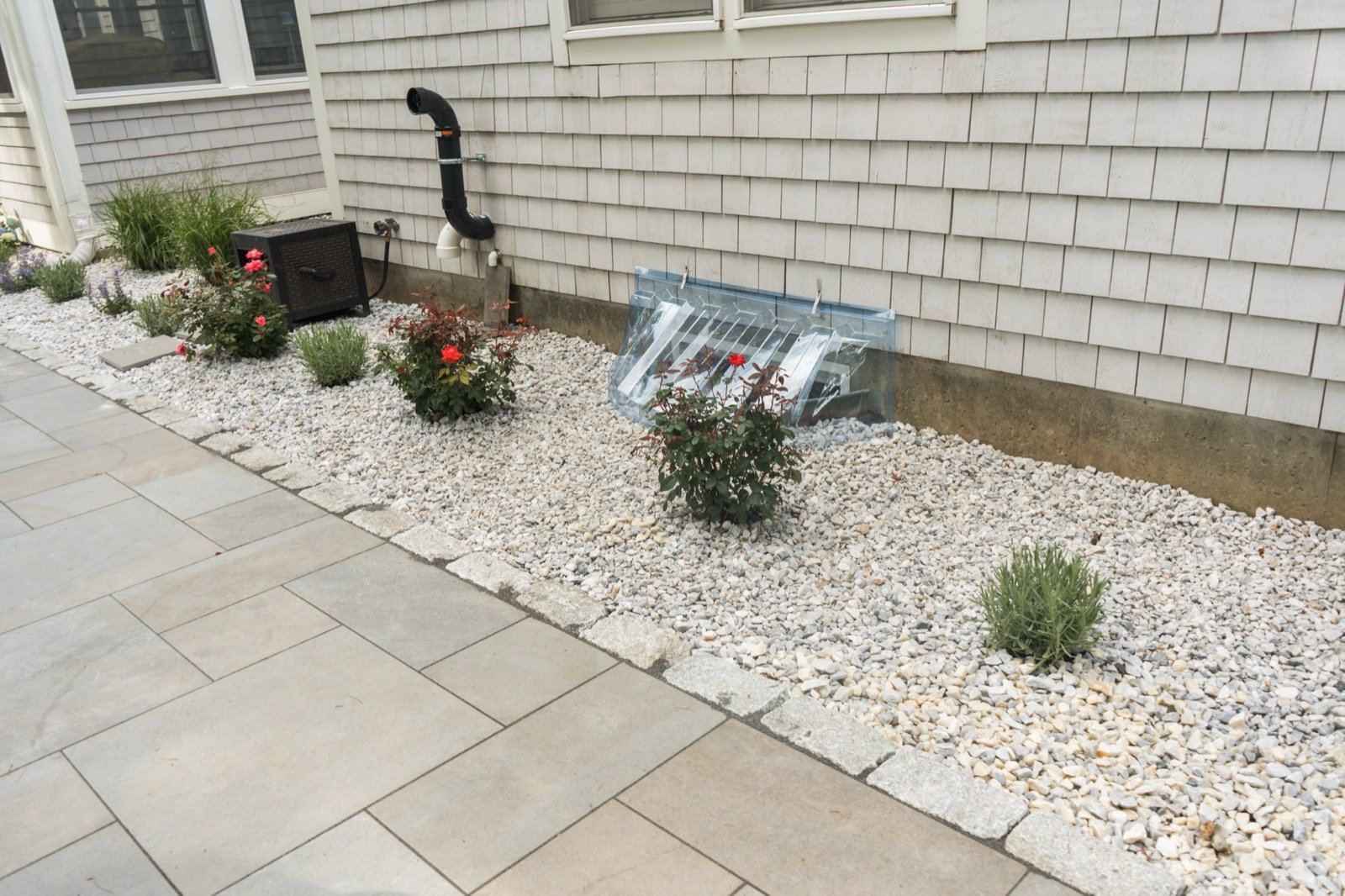
Granite cobbles are used most often as a soldier-course border alongside concrete pavers or bluestone. They add definition to the edge of a walk and hold up to the freeze-thaw cycle and salt air without staining or deteriorating.
Each material has a different look, cost range and maintenance profile. Site conditions and the finished appearance you want are both part of the decision.
Whatever material you choose, a walkway on Cape Cod stands or falls on excavation depth, compaction in lifts and drainage below the surface. Sandy soil drains quickly but shifts under load, so the base course is where the real work happens, not the top.
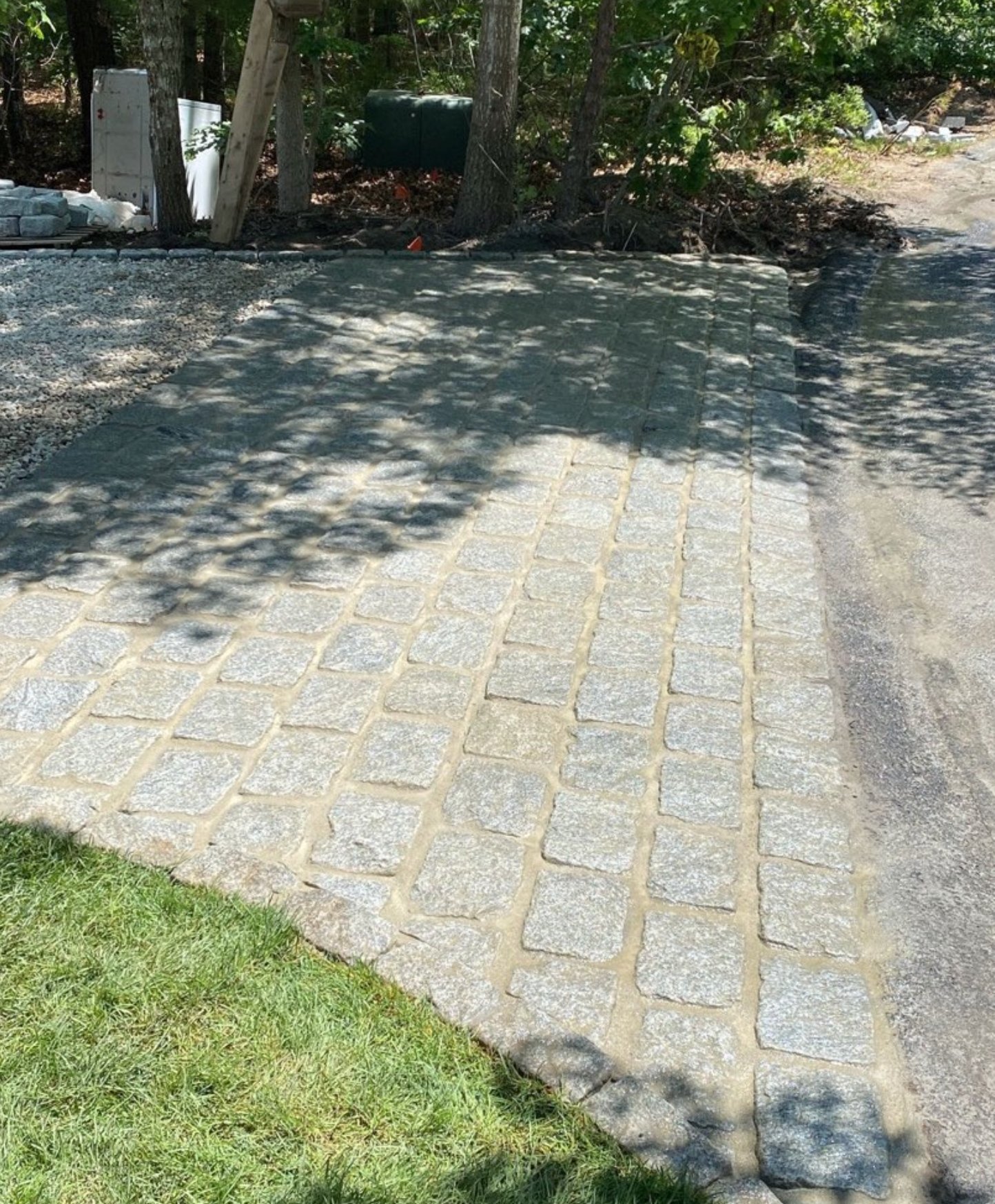
Ask any contractor how deep they excavate and how they compact the crushed-stone base. On Cape Cod, sandy granular soil moves under load and drains fast, but without lifts compacted to proper density the surface will heave and settle after the first few winters. A vague answer here is a red flag.
A walkway that pitches water toward a foundation or pools at a low point is a liability regardless of how it looks. Before work begins, confirm that the contractor will establish a positive drainage slope of at least one percent away from the house and that the plan accounts for where runoff exits the lot.
Not every paver or bluestone product performs the same in a salt-air, wet-freeze-thaw environment. Ask specifically how the proposed unit handles repeated cycling and what joint system will be used. Polymeric sand, edge restraint type, and bedding depth all affect how the surface holds up over time.
Many Cape Cod lots sit within 100 feet of a wetland resource area, which brings the project under the Massachusetts Wetlands Protection Act and requires a filing with the local Conservation Commission. Properties in a historic district face separate review. Confirm whether your address triggers either requirement before the scope is written.
Our installation process
A paver or bluestone walkway is more than the surface you walk on. Its performance begins below grade, with excavation depth, compaction, drainage and the installation sequence that holds everything level through a Cape Cod winter.
Base preparation, compaction in lifts, edge restraints and joint sand all happen beneath or around the stone. Those details are what keep a walkway level after years of freeze-thaw cycles on Cape Cod.
We walk the run, read the grade and measure the layout. Soil conditions, access for machinery and proximity to wetland resource areas are identified before any work is scheduled.
We confirm the walkway line, width, pattern and material. Work within the 100-foot buffer of a wetland resource area is filed with the local Conservation Commission under the Massachusetts Wetlands Protection Act before construction begins.
The trench is excavated to the depth the soil and frost conditions on your lot require, typically eight to twelve inches in a coastal Massachusetts climate. Spoils and any existing material are removed from the site.
Processed crushed stone is installed and compacted in two-to-four-inch lifts over geotextile fabric where needed. Compacting in lifts rather than all at once is what keeps Cape Cod's sandy soil from moving under load.
Bedding sand is screeded to establish the correct pitch away from the structure. Pavers or bluestone slabs are then set in the chosen pattern, with edge restraints spiked into place along the perimeter.
Polymeric sand is swept into every joint and activated according to the manufacturer's specification. Fully filled joints resist weed intrusion, ant activity and the water infiltration that causes frost heave over time.
Lawn edges and surrounding grades are restored, debris is removed and a final walk-through confirms consistent joint spacing, correct pitch and no lippage greater than an eighth of an inch between adjacent units.
The compacted crushed stone and the edge restraints are buried once the job is done. Their importance is not. That is why those stages are never rushed.
Planning your project
The installation window depends on walkway size, material, site access, and how much regrading the run requires. For most residential projects on Cape Cod, active work falls into one of three ranges.
Typically a straightforward run with good site access, standard excavation depth, and no major grading changes.
More excavation, base material, and surface area to set, with additional time for edge restraints and joint work.
Walkways with curves, borders, mortared bluestone, or significant regrading take longer, plus cure time if a mortar bed is used.
These ranges cover time on site. Town filings for work near wetland buffer zones, material lead times, weather, and site access can all affect when work begins and how the schedule runs.
Demand for paver and bluestone work rises sharply through May and June on Cape Cod. Winter months are slower and often the best time to plan. Booking early gives you more control over timing and material selection before the busy season begins.
Read your walkway
An aging or poorly built walkway usually gives you warning before it becomes a real problem. Uneven surface, pooling water, lifted edges and widening joints can all point to a base that is no longer doing its job.
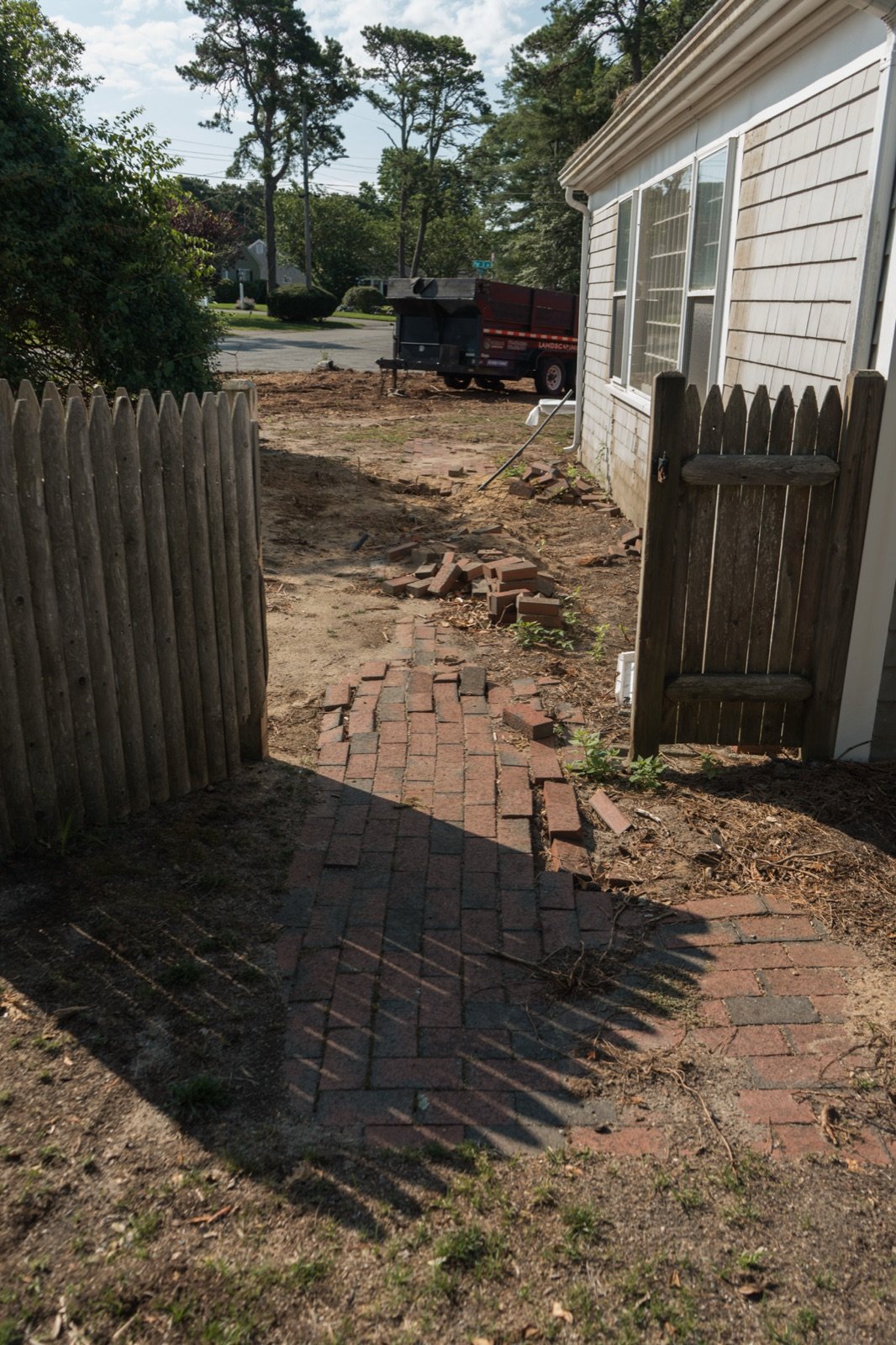
Freeze-thaw cycles push water into the base, and that water expands when it freezes. A base that was set too thin or never compacted in lifts heaves whatever sits on top of it each winter.
Puddles sitting on the walkway after rain usually mean the pitch has shifted or was never set correctly. Water that ponds near the house threshold is worth taking seriously before it works toward the foundation.
A walkway that dips in the middle or has edges pulling away from the lawn indicates the base material has shifted under load. Sandy Cape Cod soil makes this happen faster when compaction was skipped.
If sand or fines disappear from the joints after every heavy rain, the bedding layer below is likely eroding too. Unstabilized joints allow movement between units that compounds over time.
A raised edge between two pavers or stones is a trip hazard and a sign of uneven settlement beneath. More than a small difference in height between adjacent units means the base needs to be addressed, not just the surface.
When the border of a walkway separates from the field, the units inside have no lateral support and will begin to spread and shift. This usually means the spikes holding the restraint have worked loose in soft or sandy soil.
A site visit can identify whether the base can be saved or whether a properly built replacement walkway is the better investment for the long run.
Installing a walkway on Cape Cod means working with sandy soil that drains quickly but shifts under load and moves through freeze-thaw cycles differently than heavier inland ground. A walkway that holds level through a Cape winter starts well below the surface, with excavation to the depth that your specific lot calls for and a base compacted in lifts rather than dumped and graded in one pass.
Every walkway we install includes layout and design consultation, excavation and spoil removal, crushed-stone base material compacted in lifts with geotextile fabric where the soil calls for it, screeded bedding sand set to the correct pitch, pavers or bluestone placed in the chosen pattern, edge restraints spiked to spec, and joint filling with polymeric sand. The base, drainage pitch and edge restraint are part of the system from the start, not items added if a problem shows up later.
Work within 100 feet of a wetland resource area falls in the buffer zone under the Massachusetts Wetlands Protection Act and is filed with the local Conservation Commission. Many Cape Cod properties sit close to ponds, marshes or coastal resource areas, which can affect project planning before a shovel goes in the ground. We check your address at the site visit rather than after the work is already scheduled. Schedule a site visit to discuss your property
We excavate to the depth your soil calls for, install geotextile fabric, and compact processed gravel in lifts before the bedding sand is ever screeded. That sequence is not optional on sandy Cape lots where freeze-thaw and soil movement are the reason most walkways go uneven.
Salt air, sandy soil, and New England freeze-thaw cycles expose every shortcut in a base. We set the correct pitch, compact in layers, and use edge restraints spiked to spec so the surface stays level and draining through year ten and beyond.
Ademir Reine, Owner & Founder, learned masonry in Brazil and has more than twenty years in the trade. He has been building on Cape Cod since 2016 and is the person who walks your site and measures the run. Learn more about the company.
Ademir will take a prospective customer to see completed walkways nearby so you are not judging the craftsmanship from a photo. You can walk on the surface, look at the joints, and see how the edge sits after a full season.
Proper excavation, compacted base, and correct pitch are part of every walkway we install on Cape Cod.
Homeowners across Cape Cod trust Moriah Masonry & Landscaping for paver and bluestone walkway installation done right the first time. See more feedback on Google .
Highly recommend Moriah Landscaping! Ademir and his team go above and beyond with their hard work, professionalism, timeliness, and quality of work. Ademir's team is pivotal in helping us receive excellent reviews on a new listing: Mariner's Landing. Really appreciate Moriah's care in their work.
Ademir and the Moriah team are excellent in their work. They do a great job with spring/fall cleanup and our winterizing. Professional and always willing to help. Since moving to the cape, they have been so reliable and consistent. I highly recommend using them.
5 stars!!!! The whole crew is great. Thanks as always and see you at the next project. BPU
