Google Rating
4.7-Star Google Rating
Customer feedback on Google
Home / Services / Yard Drainage on Cape Cod
Yard Drainage Company
Moriah Masonry & Landscaping installs yard drainage in South Yarmouth, MA, moving standing water and groundwater away from your foundation, lawn, and hardscape with French drains, catch basins, swales, and dry wells.
The Cape is a glacial sandbar, and much of South Yarmouth sits close to the water table near Bass River and Nantucket Sound. Poor drainage is one of the main reasons hardscape fails and basements weep on this part of the coast.
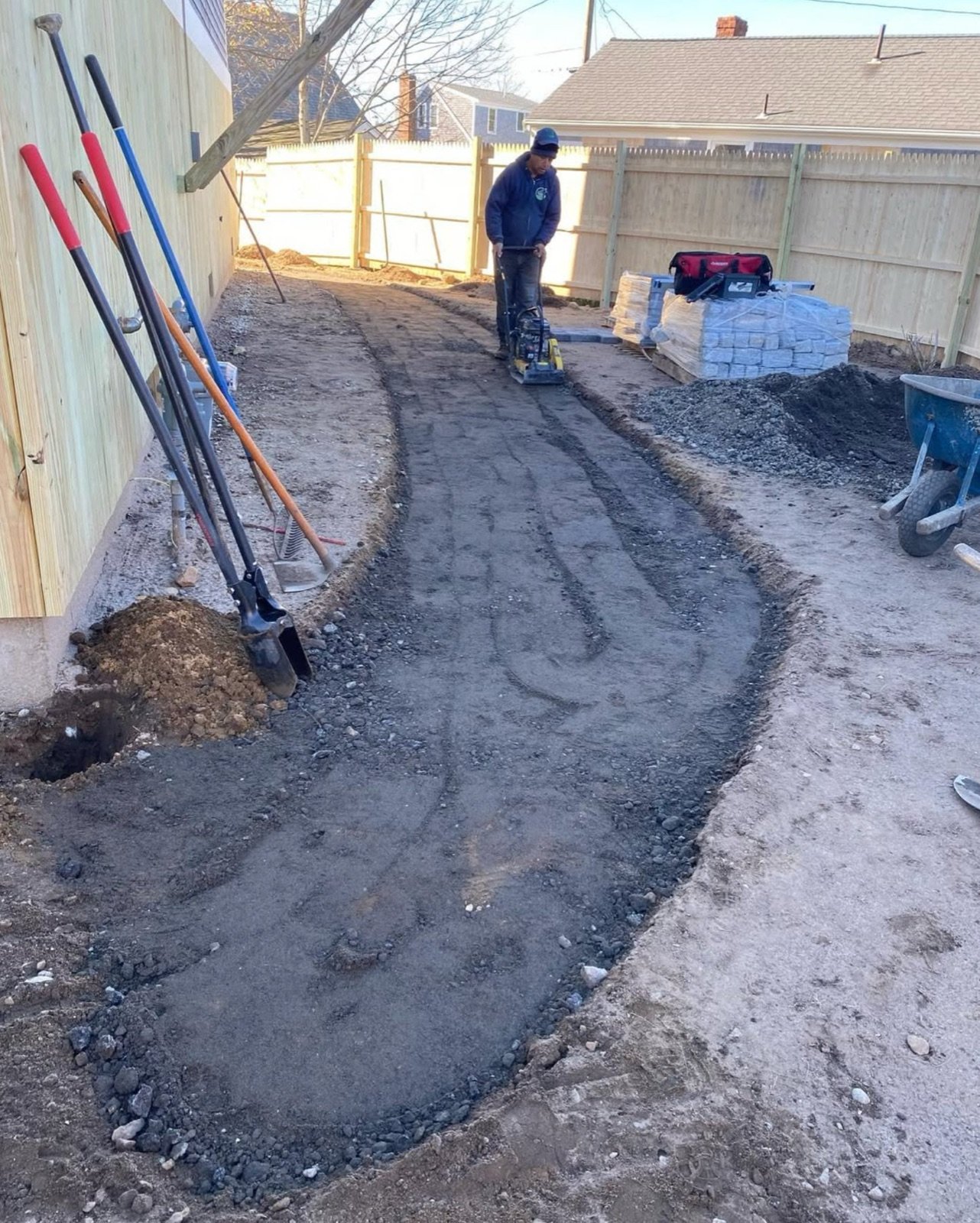
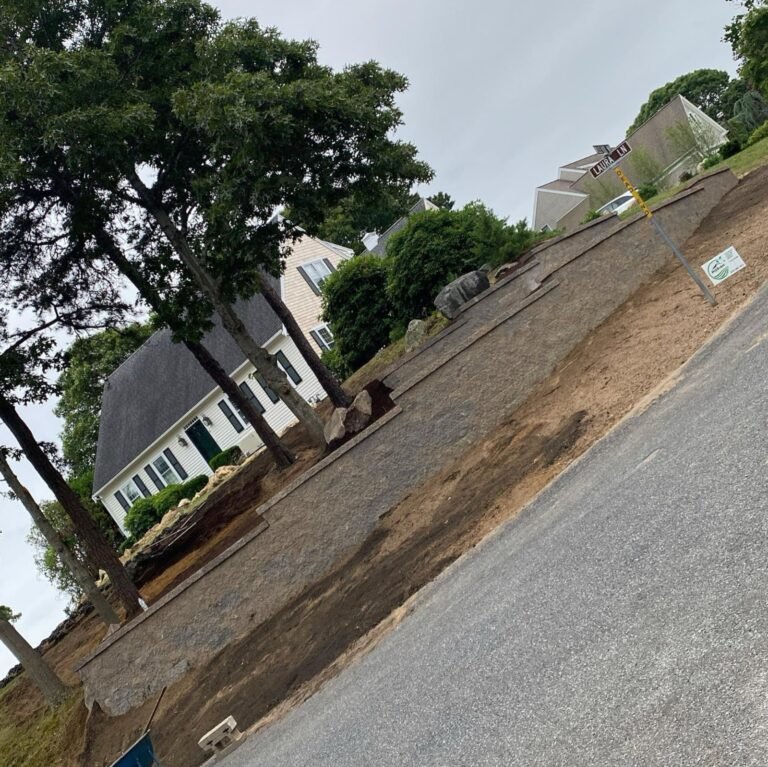
French drains, catch basins, swales, and dry wells coordinated around Cape Cod sand, ledge, and coastal water table conditions.
Google Rating
4.7-Star Google Rating
Customer feedback on Google
Service Area
15 Communities Across Cape Cod
Local Experience
Since 2020 Serving South Yarmouth
Yard drainage and landscaping work across Cape Cod
Project Estimates
Free Estimates Available
Talk with the team about your drainage project before getting started
Yard drainage on Cape Cod is not the same work it is twenty miles off-peninsula. The ground here is glacial outwash sand, which drops water fast in some spots and stacks it sideways in others when it hits hardpan or the high water table near Bass River and Nantucket Sound. What looks like a drainage problem in the lawn is often a ground problem underneath it.
Moriah Masonry & Landscaping has worked through those realities since 2020 on properties across South Yarmouth and the broader Cape. French drains, catch basins, surface swales, and dry wells each carry a site-specific component that a contractor unfamiliar with coastal Massachusetts soils cannot reliably account for.
This is also a region of second homes and rental properties. Owners in Boston or New York need a drainage contractor who communicates clearly, handles permitting near wetlands honestly, and does not require on-site supervision to do the job right.
Services
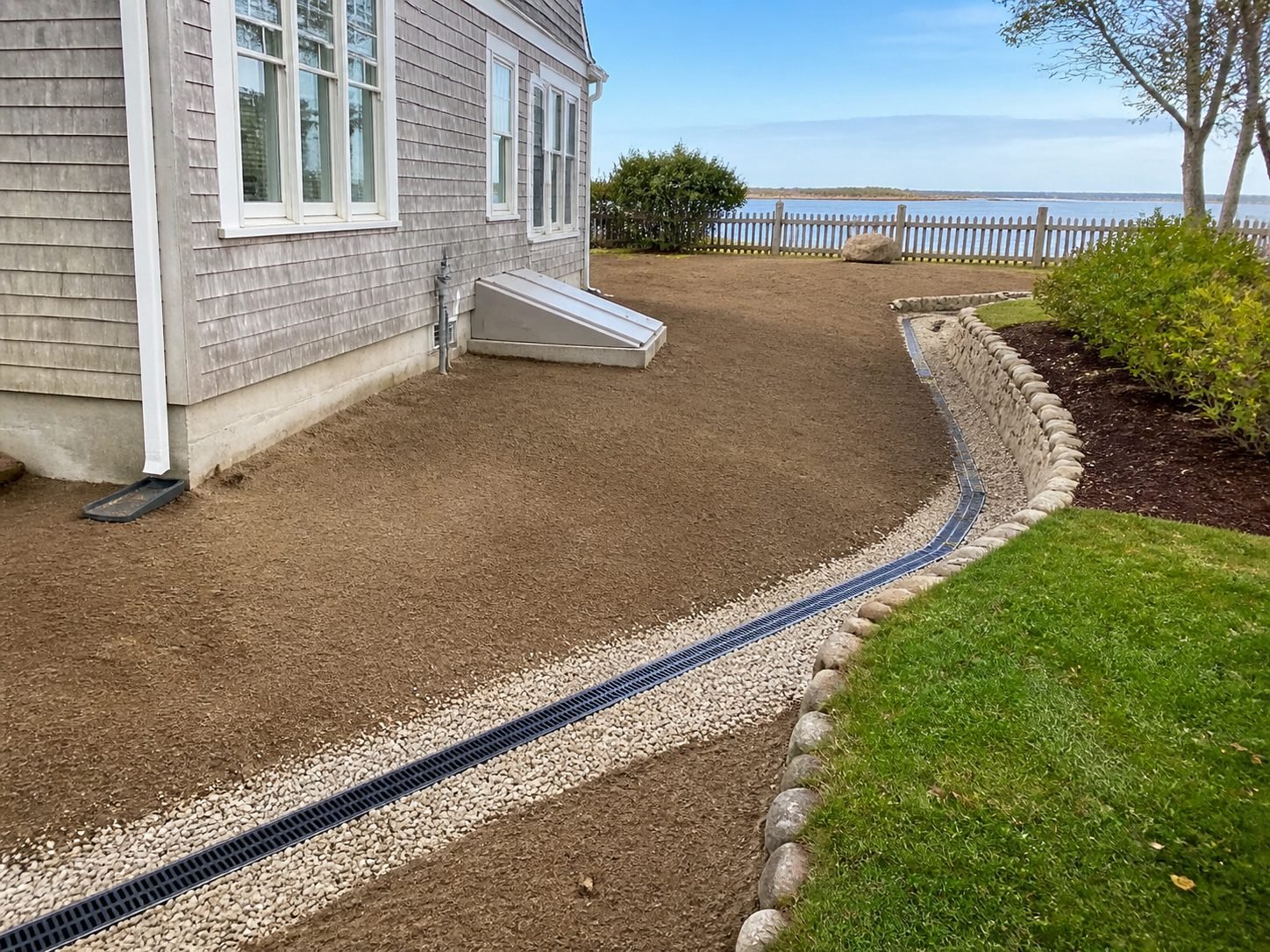
A French drain intercepts groundwater moving through the soil before it reaches your foundation or saturates your lawn. Perforated pipe is bedded on washed stone, wrapped in geotextile filter fabric to resist silt intrusion, and pitched at least 1 percent toward a daylight outlet. On sandy Cape soil, this is the most common fix for chronic soggy turf and weeping basement walls.
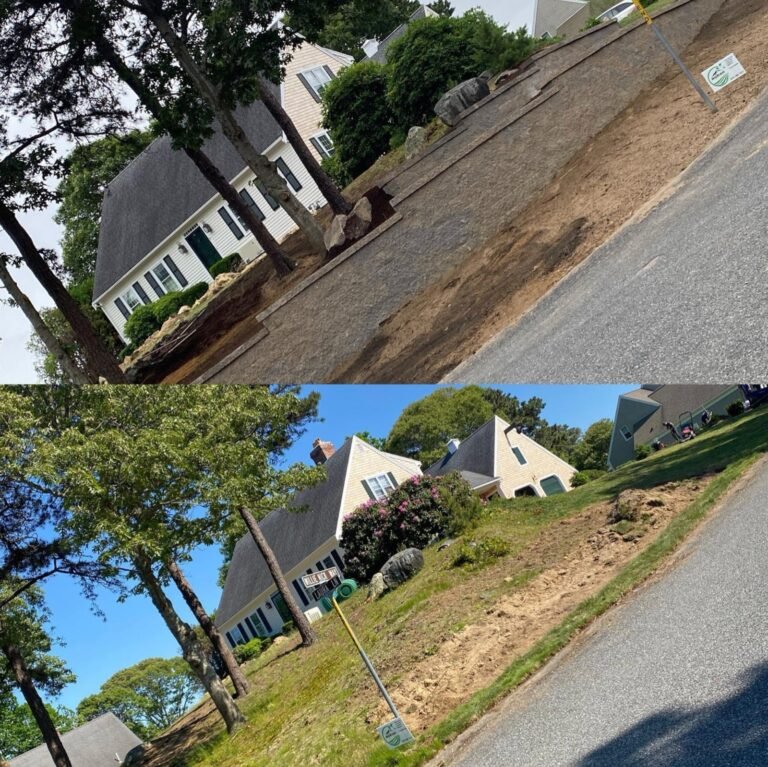
A catch basin captures surface runoff at a low point in the yard and routes it away through a solid discharge pipe. Basins are set flush with finish grade so mowing and foot traffic are not affected after the job is done. Where a driveway, patio edge, or lawn low spot collects water after every storm, a catch basin tied to a pop-up emitter or daylight outlet solves the problem at the source.
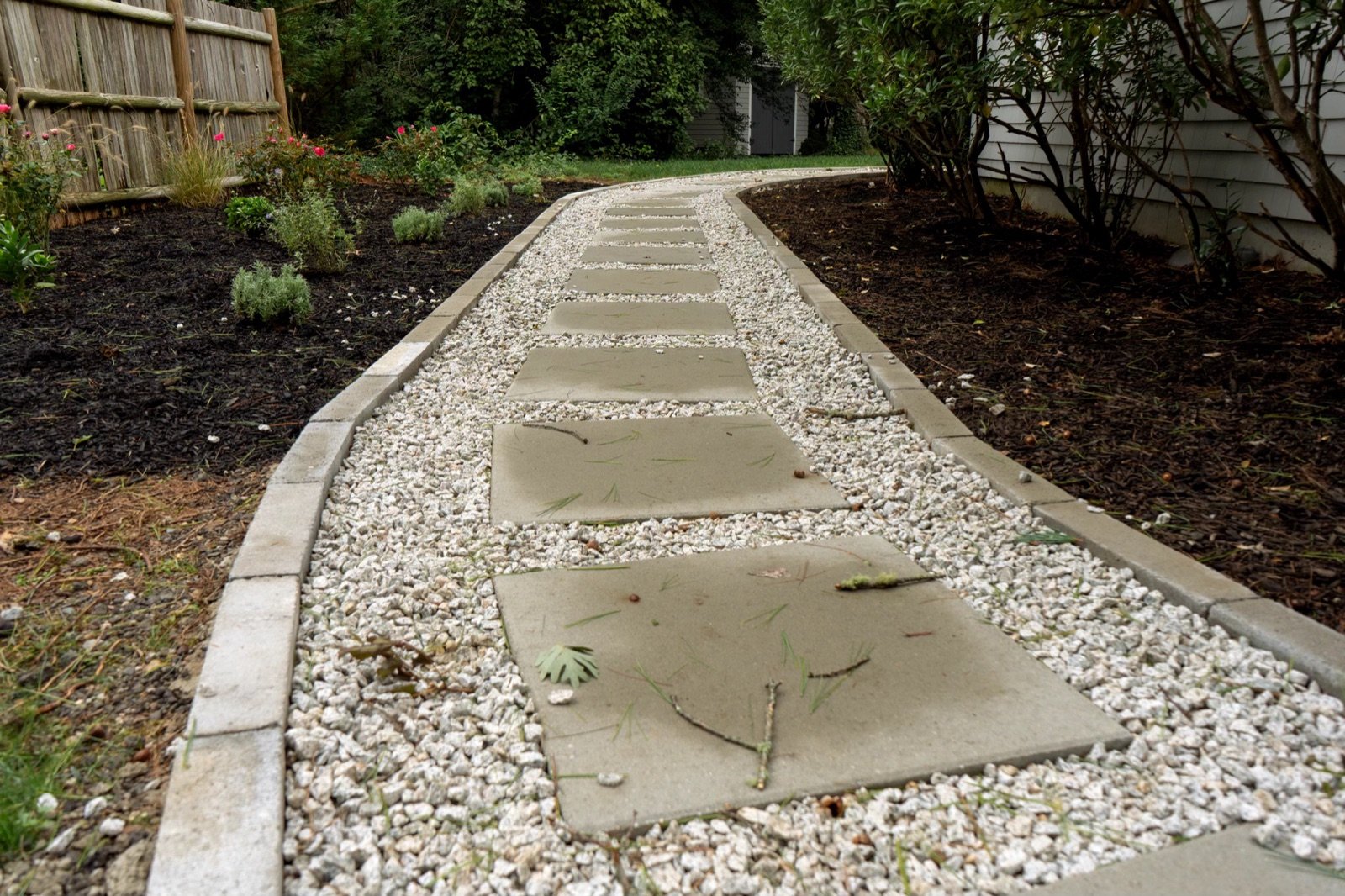
A swale is a shallow, gently sloped channel cut into the grade that guides sheet flow across the surface to a safe outlet rather than letting it pool. Combined with proper grading, swales are the most direct solution when water runs toward the house instead of away from it. Grade is set to fall at least 2 percent away from the foundation for the first 6 to 10 feet on every job we build.
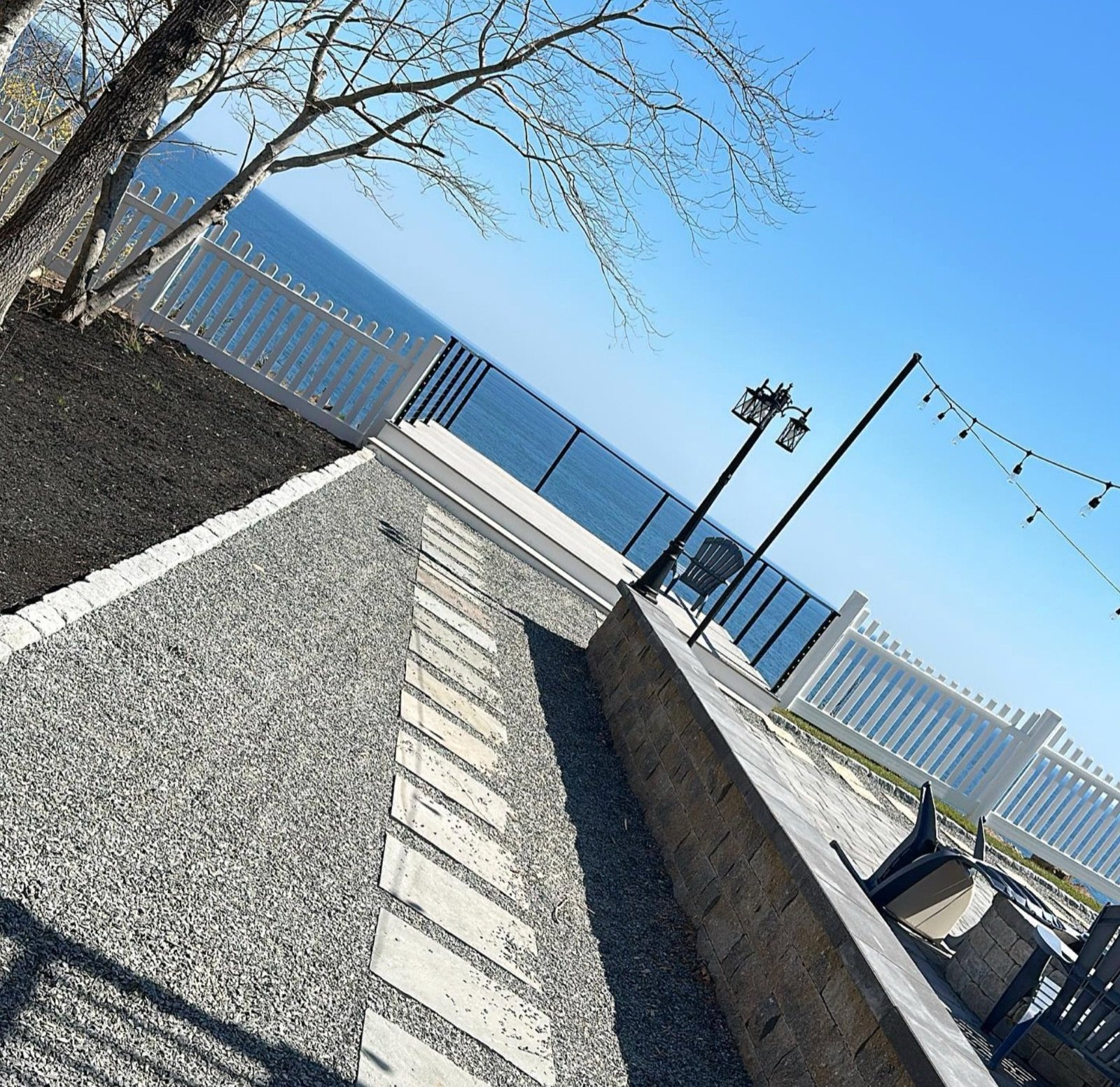
A dry well holds water on-site and releases it slowly into the surrounding soil when no gravity outlet is reachable. It is the right answer for a gravity-restricted lot where a daylight discharge is not possible. On Cape Cod, where ledge or hardpan beneath the sand can block deep infiltration, we evaluate soil conditions before specifying a dry well so you are not paying for a system that cannot handle the volume.
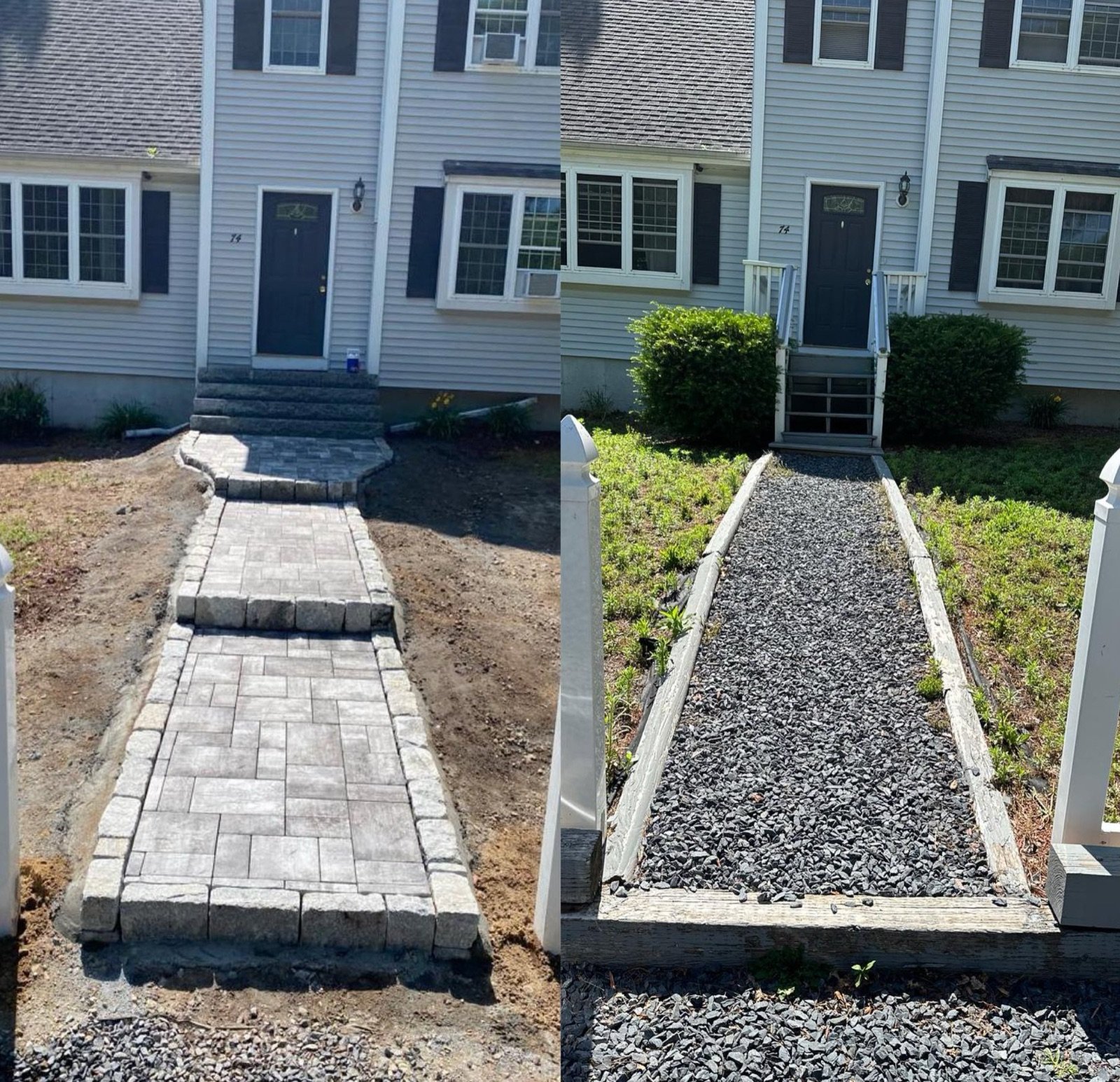
Every drainage job starts with a walk of the property to find where water enters, where it pools, and where it can safely exit. We check elevation, slope, soil type, and proximity to wetland buffers before a trench is marked. Utility locates are called in before any digging begins. The assessment sets the pipe run, outlet location, and basin count, and it is included at no charge with your estimate.
Get a free on-site estimate
Trenches are dug to a minimum of 12 to 18 inches and pitched at least 1 percent toward the outlet. Filter fabric is laid into the trench first, then 2 to 3 inches of washed drainage stone, then perforated pipe, then more stone, and the fabric is wrapped closed burrito-style before backfill goes in. That sequence keeps silt out of the stone and the pipe flowing for years rather than months.
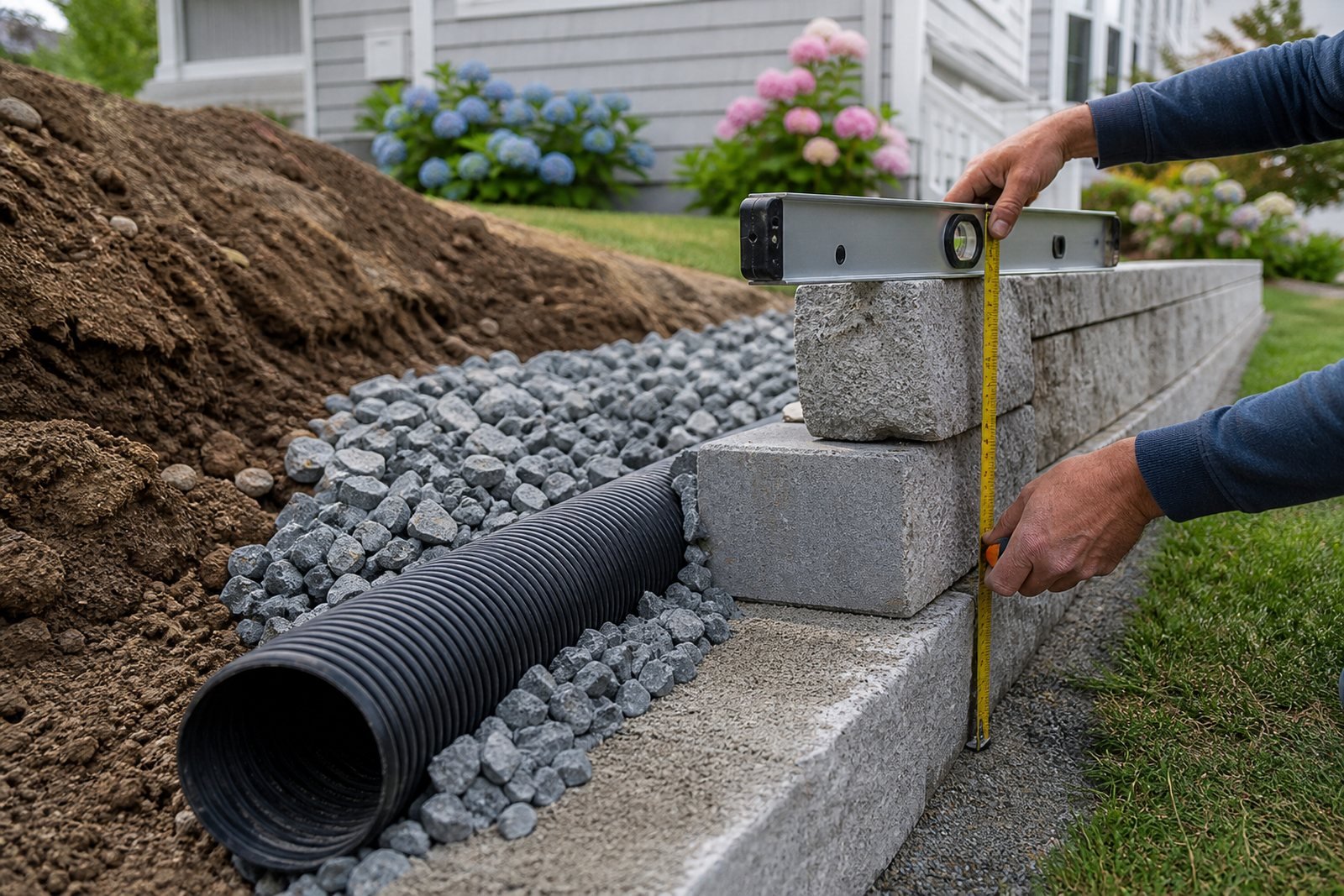
Once pipe, stone, and basins are in place and the flow is tested with water, the trench is backfilled and compacted. Topsoil is brought up to finish grade and the surface is restored with seed, sod, or mulch to match the surrounding yard. Pavers or concrete that need to come up to allow trenching are a separate scope item, priced and agreed on before work begins.
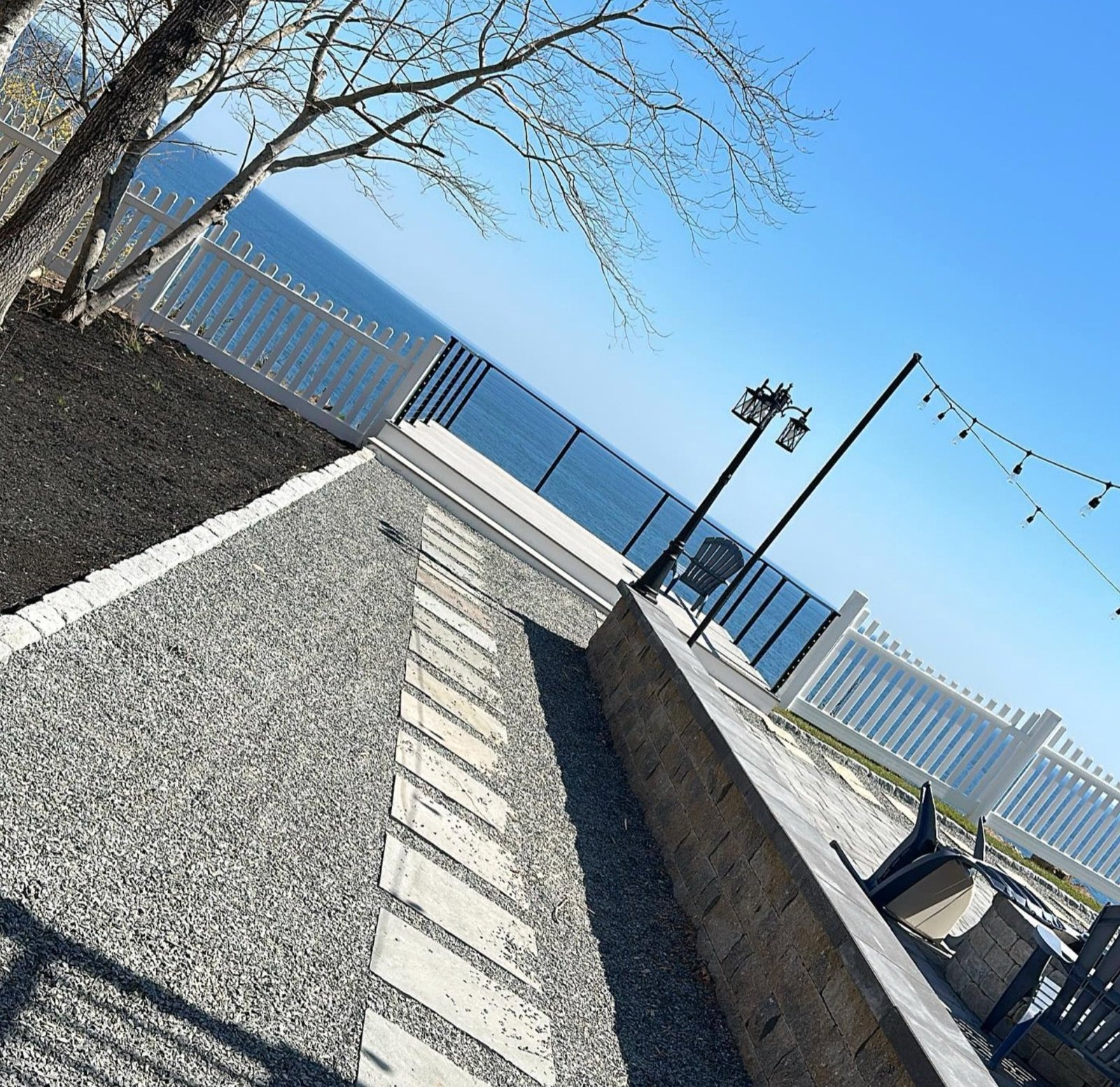
Work within 100 feet of a wetland resource area or 200 feet of a river in Yarmouth, including anything near Bass River, requires Conservation Commission review before ground is broken. We identify during the site assessment whether your project falls inside that buffer so permitting is built into the schedule from the start. Permit fees are a separate line item and are not included in the installation price.
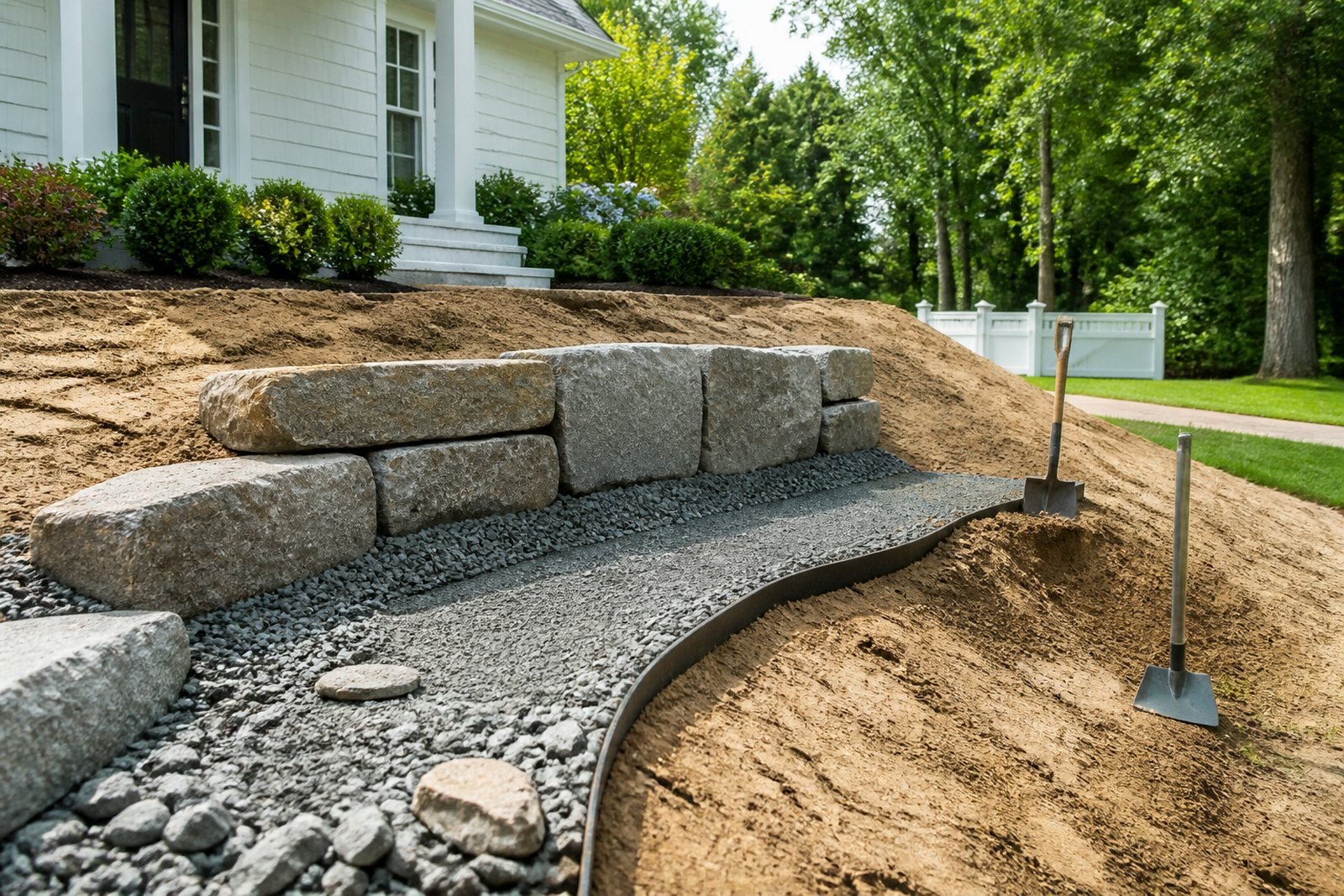
A gutter downspout that dumps against the foundation is one of the most common causes of water in a South Yarmouth basement. We extend the discharge underground in solid pipe to a pop-up emitter set away from the house, so the water releases at grade well clear of the structure. This is often the quickest and least invasive drainage fix on the list.
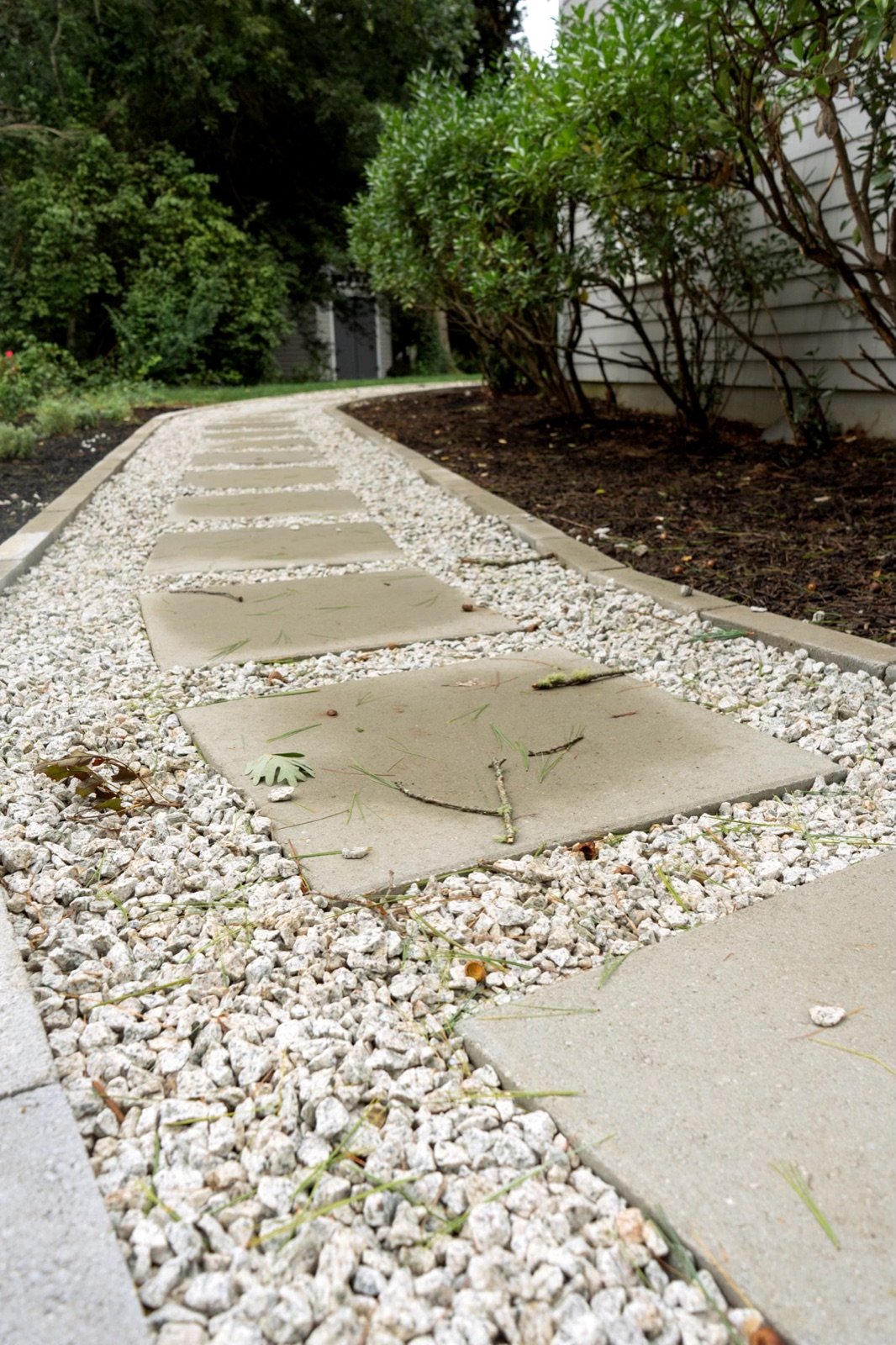
Catch basins collect sediment over time and need occasional cleanout to keep the system flowing at capacity. We can inspect basins and emitters, clear accumulated debris, and flag any pipe settling or separation before it becomes a bigger problem. Scheduling a check after a heavy storm season keeps the system working the way it was designed.
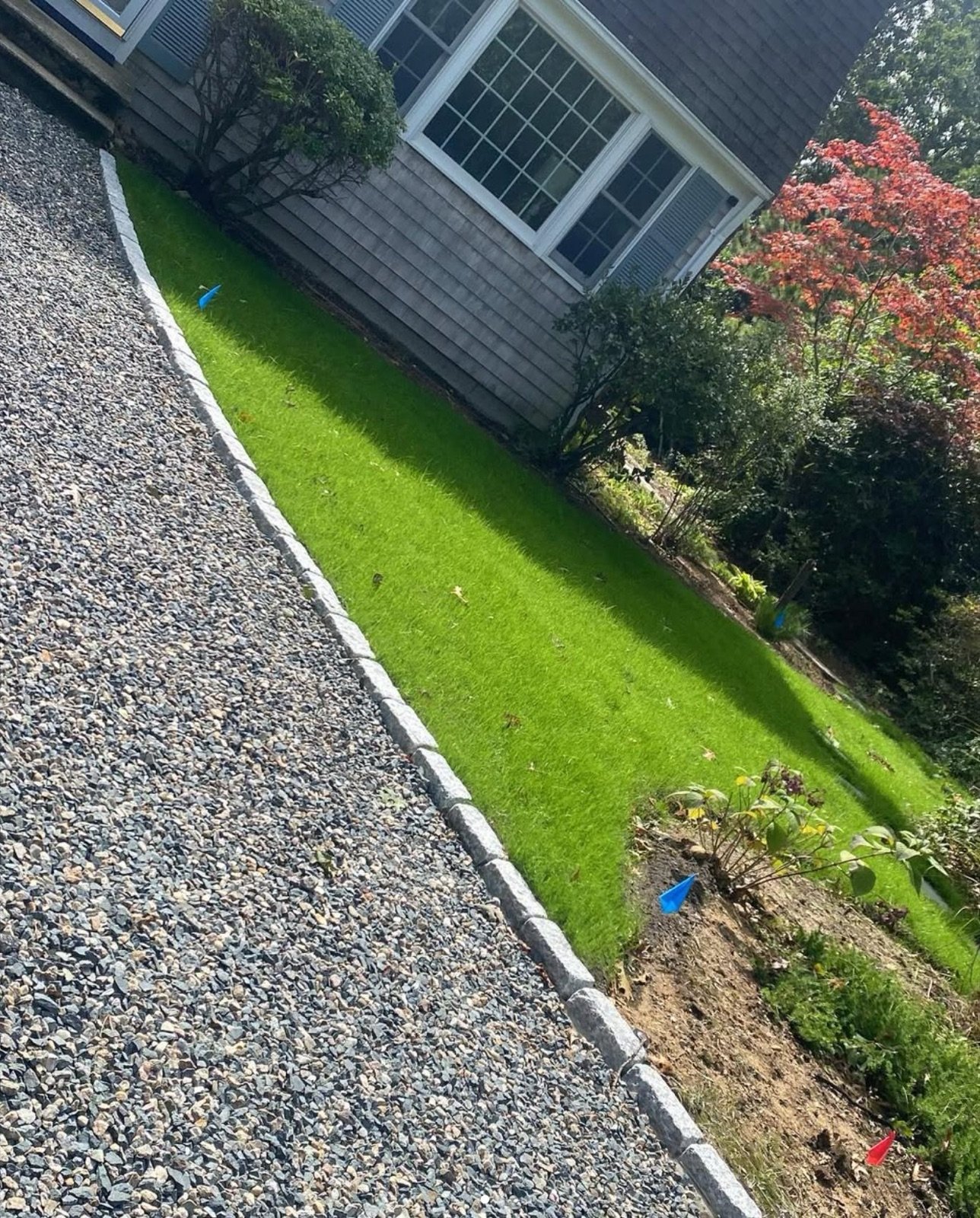
A curtain drain, sometimes called an interceptor drain, is installed uphill of a structure to catch groundwater before it reaches the foundation wall. It is the right fix when water travels through the soil toward the house rather than running across the surface toward it. On Cape Cod lots where the water table sits close to the surface near Bass River, a curtain drain often works where grading alone cannot.
Homeowners across Cape Cod have shared 4.7-star feedback for Moriah Masonry & Landscaping on Google , highlighting careful work, professional crews, and drainage and landscape projects built with real attention to detail.
Excellent work carried out by great people; everything was done with great excellence and care. I recommend them to everyone I know who is looking to hire a landscaping company that truly cares about their property.
Ademir & Regis did a fabulous job. They transformed the backyard into a beautiful landscaped and functional space, and were great partners in executing the design plan.
They're professionals, always ready to help.
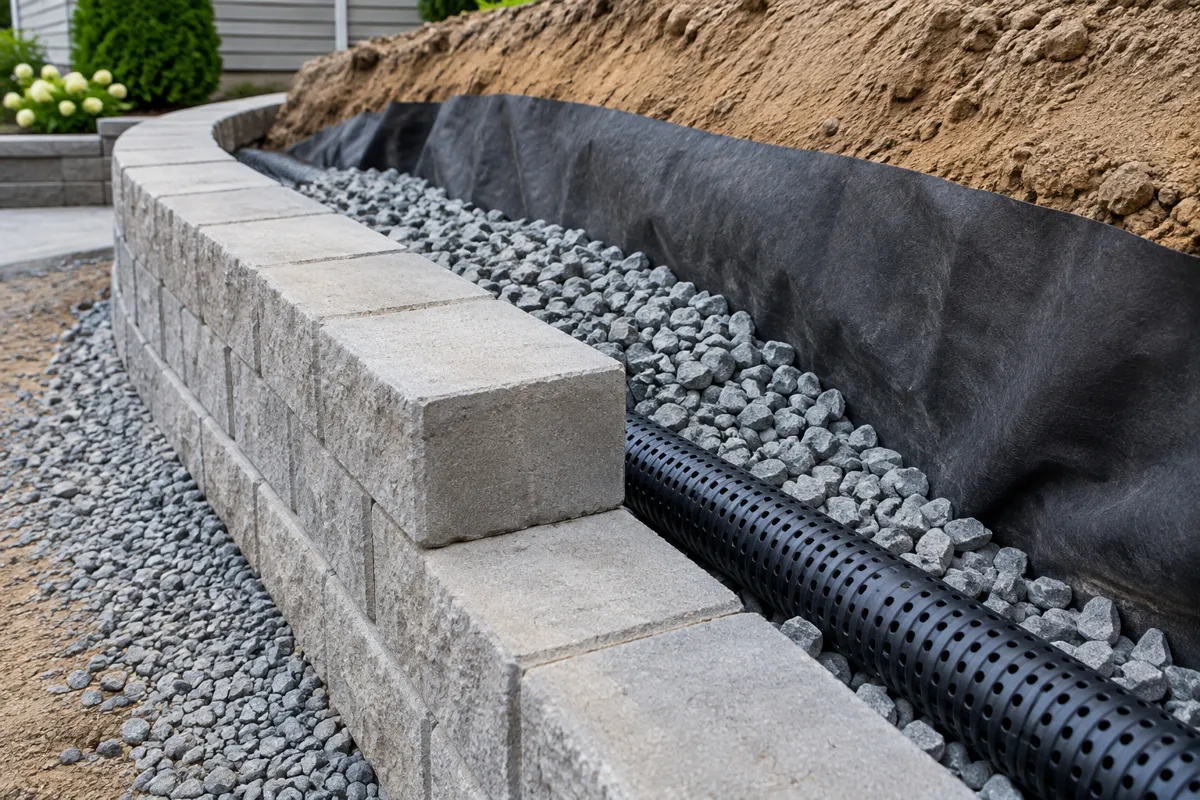
Most South Yarmouth lots need more than one approach. Surface grading handles sheet flow, but groundwater moving through the soil calls for a subsurface solution, and many yards need both working together.
| System | Best for | Cape Cod durability note | Learn more |
|---|---|---|---|
| French Drain | Lots with groundwater moving through the soil or a yard that stays soggy well after rain stops | Most durable when wrapped in non-woven geotextile fabric; Cape sand shifts around bare pipe and allows silt intrusion over time | Landscaping services in South Yarmouth |
| Catch Basin and Area Drain | Low points where surface runoff concentrates, such as the base of a slope or a driveway apron | Requires a solid-pipe discharge line to a daylight outlet; proximity to Bass River or coastal wetlands may trigger Conservation Commission review | Landscaping services in South Yarmouth |
| Surface Swale and Grading | Properties where water crosses grade as sheet flow and needs to be channeled away from the foundation | Effective and low-maintenance when pitched correctly; Cape lots close to the water table benefit most from combining a swale with a subsurface pipe | Landscaping services in South Yarmouth |
| Dry Well | Sites where no gravity outlet exists and water must be held on-site for gradual infiltration | Works well in sandy Cape soil above the seasonal high water table; undersized or shallow dry wells fill and fail when the water table rises in winter and spring | Landscaping services in South Yarmouth |
| Full-Property System | Properties with multiple low spots, a foundation at risk, or failed prior drainage work | Combining catch basins, French drains, and a daylight or dry-well outlet is the most reliable solution for the variable soils and high water table common near Bass River | Get a free on-site estimate |
Moriah Masonry & Landscaping prices yard drainage in South Yarmouth after an on-site visit, because the cost is set by trench length, dig depth, and where the water can safely go. A 25-foot downspout fix and a full-property French drain system are not the same job, and quoting without walking the property produces a number that does not hold. As a planning figure, an exterior French drain on Cape Cod typically runs $10 to $35 per linear foot installed in 2026, and a whole-property system usually lands between $2,100 and $7,200. The table below shows the factors we evaluate when scoping a drainage project. A confirmed price is included in the written scope before any work is scheduled.
| Cost factor | Typical impact on project price | What drives it on Cape Cod |
|---|---|---|
| Trench footage and depth | Primary driver of labor and materials | More linear feet and deeper burial mean more excavation time, more drainage stone, and more filter fabric wrapped around the pipe bed. |
| Soil conditions and subsurface material | Directly affects dig time and equipment needs | Clean Cape sand digs fast; buried ledge, hardpan, or a high water table near Bass River slows excavation and may require alternate routing to a dry well. |
| Number of catch basins and clean-outs | Per-unit material and labor add-on | Each NDS basin, grate, and access point adds cost. Most South Yarmouth yards with surface ponding need at least one catch basin at the low point. |
| Outlet type and distance | Significant when gravity outlet is far or absent | A nearby daylight pop-up emitter is the lowest-cost option. A long solid discharge line, a dry well, or a sump pump for a gravity-restricted lot adds to the scope. |
| Surface restoration after trenching | Varies by existing finish material | Topsoil and seed over the trench line is included in a standard install. Replacing sod, resetting pavers, or rebuilding a mulch bed is a separate line item priced before work begins. |
| Permitting near wetlands or Bass River | Adds time and a separate fee | Work within 100 feet of a wetland or 200 feet of a river in Yarmouth requires a Conservation Commission filing. Permit fees are not included in the installation price. |
The table above covers cost drivers, not a quoted price. Every project starts with a free on-site estimate. We walk the property, confirm the outlet, check for wetland buffers, and give you a straight number before any work is scheduled.

Before any trench is laid out or material is quoted, a competent contractor walks the full lot and identifies where water enters, where it moves, and where it stalls. On Cape Cod, elevation changes of only a few inches determine whether a yard drains or floods after a storm.
A drainage system that collects water but has nowhere to send it makes the problem worse. Ask exactly where the water will go: a daylight outlet, a dry well, a street connection, or a sump pump. The answer should be site-specific, not generic.
Any reputable drainage quote lists the pipe size, stone type, and whether non-woven geotextile filter fabric wraps the stone column. Skipping the fabric is the most common reason a French drain silts up and fails within a few years on Cape Cod's sandy soil.
Work near Bass River or any wetland resource area in Yarmouth may require a Conservation Commission filing before excavation begins. A contractor who does not raise this question during the site assessment is not accounting for your full project timeline or cost.
Moriah Masonry & Landscaping is based in South Yarmouth, MA, and installs yard drainage systems throughout the surrounding towns of Cape Cod. We know the soil conditions, elevation quirks, and Conservation Commission requirements across Yarmouth, Dennis, Barnstable, and the neighboring villages, details that matter when a lot sits near Bass River, borders a wetland buffer, or falls inside a flood zone.
Whether the job is a short downspout-to-daylight run on a quarter-acre lot or a full-property French drain system on a larger second-home property, we handle it the same way: walk the site, confirm the slope and outlet, and give you a straight number before we dig. If you manage a Cape property remotely, we keep you informed without requiring you to be on-site. Reach us at (774) 810-3204 to talk through your drainage project.
Standing water that lingers more than 24 hours after rain, soggy turf that never dries between storms, and water pooling against a foundation are the clearest signals. On Cape Cod, sandy soil drains fast in some spots and ponds in others depending on elevation, so low points near a foundation or hardscape edge are the first places we check.
The right system follows where the water comes from and where it needs to go. A French drain intercepts groundwater moving through soil; a catch basin captures surface runoff at a low point; a swale channels sheet flow across grade; a dry well holds water on-site when no gravity outlet exists. We assess slope, soil type, and outlet options before recommending a combination, since most Cape Cod yards need more than one approach.
Work within 100 feet of a wetland resource area or 200 feet of a river in Yarmouth, including anything near Bass River, requires Conservation Commission review before we break ground. We identify whether your drainage project falls inside that buffer during the site assessment so permitting is factored into the schedule from the start. Permit fees are a separate line item and are not included in the installation price.
We include site evaluation, excavation, perforated pipe, washed drainage stone, geotextile filter fabric, catch basin or pop-up emitter installation, connection to a daylight outlet or dry well, and basic backfill with topsoil and seed or sod over the trench line. Permitting fees, sump pump electrical work, and extensive hardscape removal or replacement are separate items, priced before work begins.
A short downspout-to-daylight run depends on its length, how many basins or structures are involved, and how much surface has to be restored afterwards. We give you the schedule in writing after assessing the site, rather than quoting a duration before we have seen the ground. Get a Quote to start that conversation.
We bury pipe at a minimum of 12 to 18 inches and slope every trench at least 1 percent, meaning 1/8 inch per foot, toward the outlet. That pitch keeps water moving by gravity rather than sitting in the pipe. Catch basins are set flush with finish grade so mowing and normal foot traffic are not affected after the job is done.
Sandy soil shifts around pipe over time, which is why we wrap the drainage stone in non-woven geotextile filter fabric on every installation. Where ledge or hardpan sits beneath the sand, we factor in additional excavation time and may route the system to a dry well when a gravity outlet is not reachable. Soil conditions in South Yarmouth directly affect trench depth, dig time, and total project cost.
Surface restoration is included in a standard installation. Once the trench is backfilled and compacted, we cover the run with topsoil and seed, sod, or mulch to match what surrounds it. Pavers or concrete that must come up to allow trenching are treated as a separate scope item and are priced out before work begins so there are no surprises at the end. Get a Quote to review the full scope for your property.
Start the Conversation
If you are watching puddles sit on your lawn after every storm, or noticing water moving toward your foundation instead of away from it, that is the right place to start a conversation. Reach out and we will walk the site with you, talk through what the water is doing and where it needs to go, and explain what a system would involve, no pressure, no obligation.
Ademir Reine and the Moriah Masonry & Landscaping team have been installing yard drainage systems on Cape Cod properties since 2020, including French drains, catch basins, swales, and dry wells on South Yarmouth lots near Bass River and Nantucket Sound. We give free estimates after an on-site assessment.
From the gallery
A full patio and landscape installation in South Yarmouth, including grading, drainage, a stamped concrete patio, and raised planting beds built to handle water on a Cape Cod lot.
See this project