Google Rating
4.7-Star Google Rating
Customer feedback on Google

Moriah Masonry & Landscaping installs stone veneer across South Yarmouth, MA, and Cape Cod, setting manufactured and natural thin-cut stone over code-compliant wall assemblies built with a weather-resistive barrier, lath, and a cured scratch coat before a single veneer unit is placed.
Stone veneer transforms a plain foundation, facade, fireplace surround, or accent wall into a finished masonry surface that holds up in coastal salt air and freeze-thaw cycles. The right result depends on substrate prep, drainage behind the stone face, and consistent mortar joint work, not just the material you choose.
Cape Cod's sandy soil and salt-laden air demand a water-managed wall assembly. A veneer installed without proper flashing, weep screed, and a sealed weather-resistive barrier will trap moisture and fail within a few winters. Every installation we do is built to ASTM C1780 and the Masonry Veneer Manufacturers Association guide.
This page covers what our stone veneer work includes, what it costs, which veneer types suit which projects, how the installation runs step by step, where on your home stone veneer can go, and the towns we serve on the Cape.
Rated 4.7 stars across 27 Google reviews. Every project starts with a free on-site estimate.

Every stone veneer installation we complete in South Yarmouth follows the same fundamentals: substrate inspection, a proper weather-resistive barrier, lath and scratch coat, careful veneer setting, and a final drainage check at every termination and grade line.

We begin with a site evaluation and substrate inspection before any material is ordered. The weather-resistive barrier and flashing are installed or repaired, then galvanized lath is attached and a scratch coat is applied and allowed to cure 24 to 48 hours before veneer is set.
Veneer units are laid from the bottom up with consistent joint spacing. Mortar joints are tooled for consolidation, and weep screed is installed at all terminations, sills, and grade lines to meet local building code moisture management requirements.
Every installation follows ASTM C1780 and the Masonry Veneer Manufacturers Association guide. The two-layer weather-resistive barrier is lapped and sealed at penetrations. Flashing is integrated at every transition. The job closes with a drainage and code compliance check across the full assembly.
The barrier, lath, and scratch coat are what you will not see once the stone is in place, but they are what determine whether the veneer stays tight and dry through Cape Cod winters.
Some work is part of every installation. Other items depend on the substrate condition, wall design, and specific project requirements.
Stone veneer installed to last on Cape Cod requires more than setting stone to a wall. A two-layer weather-resistive barrier lapped and sealed at every penetration, minimum 1.5 lb per square yard self-furring galvanized lath, and a scratch coat cured 24 to 48 hours before any additional coat is applied are the foundation of a durable assembly. Weep screed and flashing at all terminations, sills, and grade lines keep water moving out rather than behind the stone face. Every installation we complete meets ASTM C1780 and MVMA standards.
Every stone veneer project is priced after an on-site assessment because the real cost depends on the substrate condition, the material you choose, the coverage area, and the site conditions we find when we walk the property.
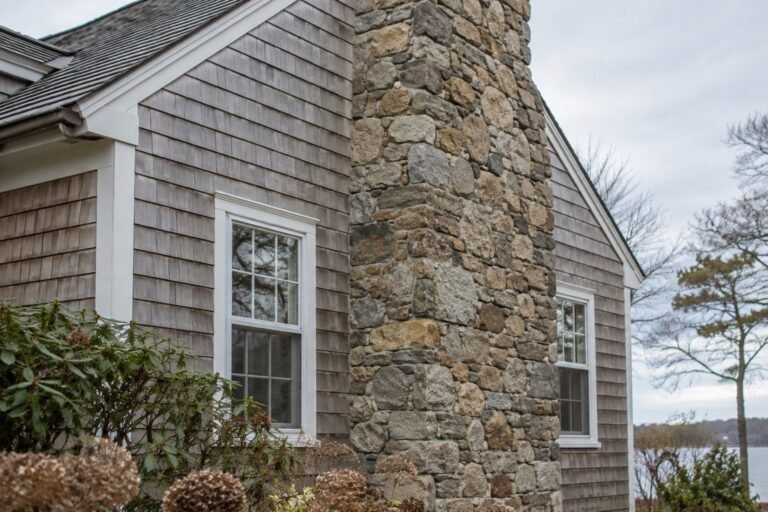
Cost tracks the square footage of wall face, the material you select, the condition of the existing substrate, how much weather-resistive barrier and lath work the assembly requires, and whether scaffolding is needed for multi-story sections. We come out, inspect the substrate, and price the actual project.
Two facades with the same square footage can carry very different costs once substrate prep, corner and trim pieces, pattern complexity, and mortar color matching are taken into account. A flat number given over the phone would leave too much out.
Typical installed range on Cape Cod, 2026
$14 to $30 per square foot installed
Stone type, coverage area, substrate condition and prep, pattern complexity, corner and trim pieces, and scaffolding requirements are what move a project inside that range. It is a starting point for planning, not a quote. The number on your estimate comes from the site visit.
These are the main material and site factors we evaluate when preparing your estimate.
Manufactured cultured stone and natural thin-cut stone carry different material costs, lead times, and installation labor.
Total square footage of wall face, plus wall height and accessibility, sets the baseline for material and labor.
Older siding removal, sheathing repairs, and additional weather-resistive barrier work all affect the scope before a single stone is set.
Complex patterns, tight-radius curves, and high waste-factor layouts increase cutting time and material cost.
Corner units, sill caps, and specialty trim pieces are priced separately from flat-field stone and add to the total.
Multi-story facades and chimney work require scaffolding, which affects both scheduling and the overall project cost.
We install four stone veneer systems for South Yarmouth and Cape Cod properties. The right choice depends on your substrate condition, the coverage area, the look you want, and how the wall manages water in Cape Cod's sand, salt, and freeze-thaw environment.
01
Manufactured veneer brands such as Cultured Stone, Eldorado Stone, Coronado Stone, and Versetta Stone are lighter than natural stone and produced to consistent profiles. They install over a code-compliant water-managed wall assembly and suit a wide range of regional styles.
02
Natural fieldstone, ledgestone, and cobblestone thin-veneer carry color and texture variation that manufactured units cannot replicate. Installed with proper lath, scratch coat, and mortar bed, they fit naturally into the character of Cape Cod homes and foundations.
 03
Quarried granite and limestone thin-veneer offer a refined, substantial appearance well suited to foundations, chimney wraps, and front-of-house facades. Pattern complexity and corner pieces influence material cost and cutting waste, which we account for in every written estimate.
 04
Stone veneer accent walls, fireplace surrounds, and foundation water table wraps let you introduce natural stone character to a specific area without a full exterior wrap. Any veneer type above can be used, and scope is sized to the surface, not a minimum project requirement.
Each veneer system has a different weight, profile, and installation requirement. Substrate condition and the look you want ultimately determine which option makes the most sense for your Cape Cod property.
Whatever veneer you choose, performance starts with a two-layer weather-resistive barrier, properly lapped lath, a scratch coat cured 24 to 48 hours, and weep screed with flashing at every termination, sill, and grade line. Those fundamentals are especially critical on Cape Cod properties exposed to salt air, driven rain, and freeze-thaw cycles.

Every stone veneer installation needs a documented plan for how water moves behind and through the assembly. On Cape Cod, where salt air and seasonal freeze-thaw cycles accelerate moisture intrusion, ask for specifics: two-layer weather-resistive barrier, weep screed placement, and flashing at all terminations, sills, and grade lines, spelled out before any material is ordered.
Stone veneer's longevity is decided before the first unit is set. Substrate condition, sheathing integrity, lath type, and scratch coat cure time all affect long-term bond strength. Ask how the installer handles older sheathing, what lath weight they specify, and how long the scratch coat cures before the veneer is laid.
Not every manufactured panel or natural thin-cut stone performs the same in a coastal environment. Ask how the proposed material handles repeated wet-freeze-thaw cycling and salt air exposure, and confirm the mortar type and joint tooling method before approving the scope of work.
Stone veneer work on Cape Cod should follow ASTM C1780 and the Masonry Veneer Manufacturers Association installation guide. Before any design is finalized, confirm whether the project requires a building permit, and verify that the installer is familiar with local moisture management code requirements for your town.
Our installation process
Stone veneer is more than the face you see. Its durability begins with the water-managed wall assembly behind it: the weather-resistive barrier, lath, scratch coat, flashing and weep screed that let the finished stone do its job for decades on Cape Cod.
The weather-resistive barrier, lath, scratch coat and flashing are all covered once the veneer is set. Those hidden layers are what prevent moisture intrusion, cracking and premature failure in Cape Cod's salt air and freeze-thaw climate.
We inspect the existing substrate, sheathing condition and any existing weather-resistive barrier. Moisture readings, access conditions and any framing concerns are documented before work begins.
A two-layer weather-resistive barrier is installed, lapped and sealed at all penetrations. Flashing and weep screed are set at terminations, sills and grade lines to meet local building code moisture management requirements.
Minimum 1.5 lb per square yard self-furring galvanized lath is mechanically fastened into studs or solid substrate. Proper lath attachment is what keeps the mortar bed and veneer bonded to the wall assembly long-term.
A scratch coat is applied over the lath and allowed to cure 24 to 48 hours before any veneer is set. This cure window is not skipped: a cold joint between the scratch coat and the veneer is one of the most common causes of veneer failure.
Stone or panel units are laid out dry first to balance color and profile, then set from the bottom up using Type S mortar with consistent joint spacing. Corner and trim pieces are cut and fitted as the field progresses.
Mortar joints are pointed and tooled for consolidation once the veneer has had time to set. Properly tooled joints compress the mortar against the stone edge, reducing the entry points where moisture and salt air can work behind the face on Cape Cod exteriors.
The finished assembly is inspected at all terminations, sills and grade lines to confirm drainage and code compliance. The site is cleaned and any sealant topcoat specified in the estimate is applied before we leave.
The weather-resistive barrier, lath and scratch coat are covered the moment the veneer goes up. Their importance isn't. That is why those stages are never rushed on our stone veneer projects.
Planning your project
Timeline depends on the scope of the job. A small accent wall and a full exterior wrap sit at opposite ends of the schedule. For most Cape Cod homes, active installation falls into one of three ranges below.
Focused interior or exterior accent work with straightforward substrate access and standard site preparation.
Includes substrate inspection, lath, scratch coat cure time, veneer setting, and mortar joint tooling across a primary facade.
Larger installations include required cure time between coats and additional drainage and code compliance checks at all terminations and grade lines.
These ranges include the mandatory 24 to 48 hour scratch coat cure required before veneer setting begins. Permit lead times, weather, material lead times, and substrate repair findings can extend the overall project calendar.
Stone veneer installation demand on Cape Cod rises sharply through May and June. If you want the work completed before summer gatherings or before the exterior painting window closes, planning ahead gives you more flexibility on scheduling and material lead times.
Read your walls
Deteriorating mortar joints, staining, cracking stone faces, and water showing up where it should not are all signals that an existing veneer assembly or bare substrate needs evaluation before the problem spreads to the framing behind it.
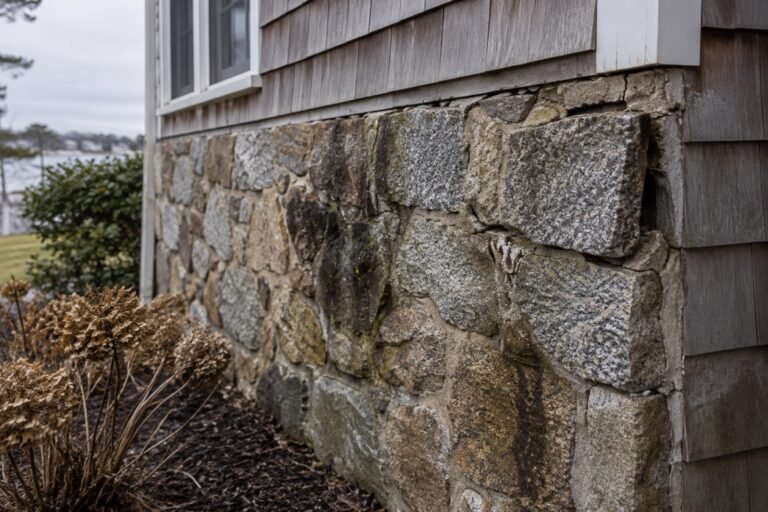
Salt air and freeze-thaw cycles common on Cape Cod break down mortar faster than in inland climates. Soft, recessed, or missing joints let water behind the veneer face.
Absorbed moisture that freezes expands inside the stone or the mortar bed and forces the face apart. Early repair limits how much material has to be replaced.
White salt deposits migrating through the veneer surface indicate water is moving through the assembly. The source needs to be identified before any cosmetic repair.
Moisture showing up on interior finishes behind a veneered wall can point to a failed weather-resistive barrier, missing flashing, or blocked weep screed at the base of the assembly.
Movement in individual stones or a section of veneer can mean the scratch coat bond has broken or that water has saturated the substrate behind the lath.
Older installations sometimes omit weep screed and proper base flashing. Without them, water that enters the cavity has no exit path and works its way into the framing over time.
An on-site assessment can identify whether the issue is surface-level or involves the substrate and drainage behind the veneer, and give you a clear scope before any work begins.
Installing stone veneer on Cape Cod demands more preparation than the same job performed inland. The combination of sandy soil, salt air, coastal humidity, and hard freeze-thaw cycles puts more stress on a wall assembly than most manufacturers account for in their standard installation guides. Getting it right means addressing moisture management at every layer, not just at the surface.
That is why every installation starts with a substrate and weather-resistive barrier inspection before any lath or mortar is applied. A two-layer weather-resistive barrier lapped and sealed at penetrations, minimum 1.5 lb per square yard self-furring galvanized lath, a scratch coat cured 24 to 48 hours, and weep screed with flashing at all terminations are standard parts of the assembly on every Cape Cod project, not upgrades.
Stone veneer work on foundations or exteriors within 100 feet of a wetland or 200 feet of a river may require Conservation Commission review before work begins. Properties in Barnstable's 6A corridor or other locally designated historic areas may also require design review. The site evaluation identifies any approvals needed, and that scope is confirmed before any material is ordered. View Yarmouth wetland information
Every installation uses a two-layer weather-resistive barrier, minimum 1.5 lb per square yard self-furring galvanized lath, and a scratch coat cured 24 to 48 hours before any veneer is set. That is the standard on every job, not a premium option. On Cape Cod, where salt air and freeze-thaw cycles attack shortcuts fast, it is the difference between stone that stays and stone that cracks loose.
Sandy soil, salt air, and hard freeze-thaw cycles pull apart veneer assemblies that skip proper flashing, weep screed, and drainage detailing. We install flashing and weep screed at every termination, sill, and grade line so water drains behind the stone face rather than collecting against the substrate. That detail is what delivers long-term crack and moisture resistance in a coastal climate.
Ademir Reine, Owner & Founder, learned masonry in Brazil and has more than twenty years in the trade. He has been building on Cape Cod since 2016 and is the person who walks your site, inspects the substrate, and oversees the installation. Learn more about the company.
Ademir will bring a prospective customer to see completed stone veneer work in the area. You are not judging the installation from a brochure or a screen; you can go stand in front of it, examine the joint lines, and see how the material has held up over time.
Proper substrate inspection, lath, scratch coat, and drainage detailing are part of every stone veneer installation we complete on Cape Cod.
Property owners across Cape Cod trust Moriah Masonry & Landscaping for stone veneer installation that holds up to salt air, freeze-thaw cycles, and coastal conditions. See more feedback on Google .
